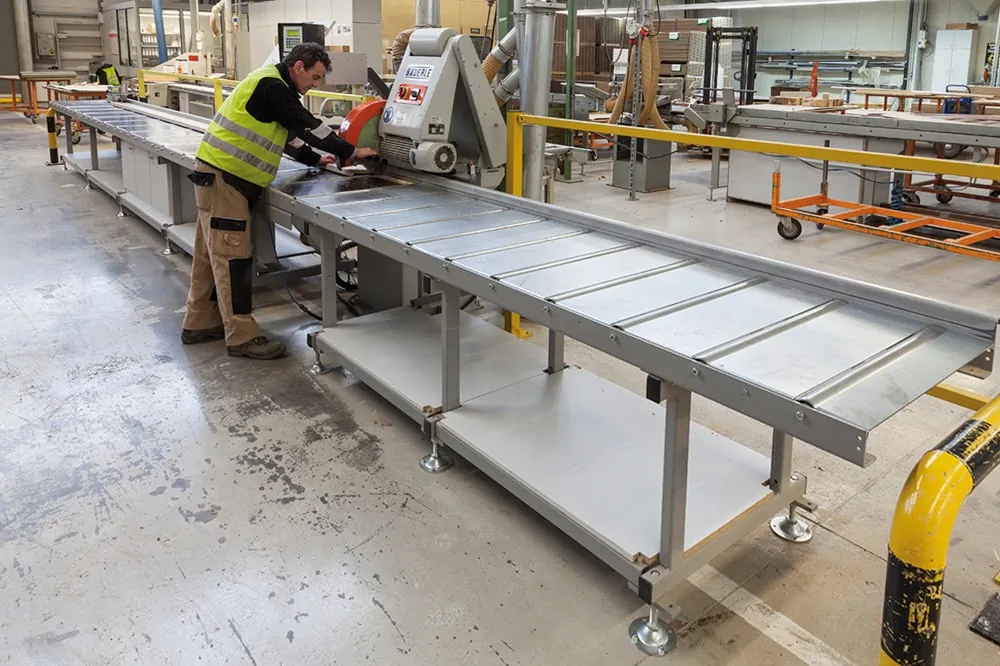
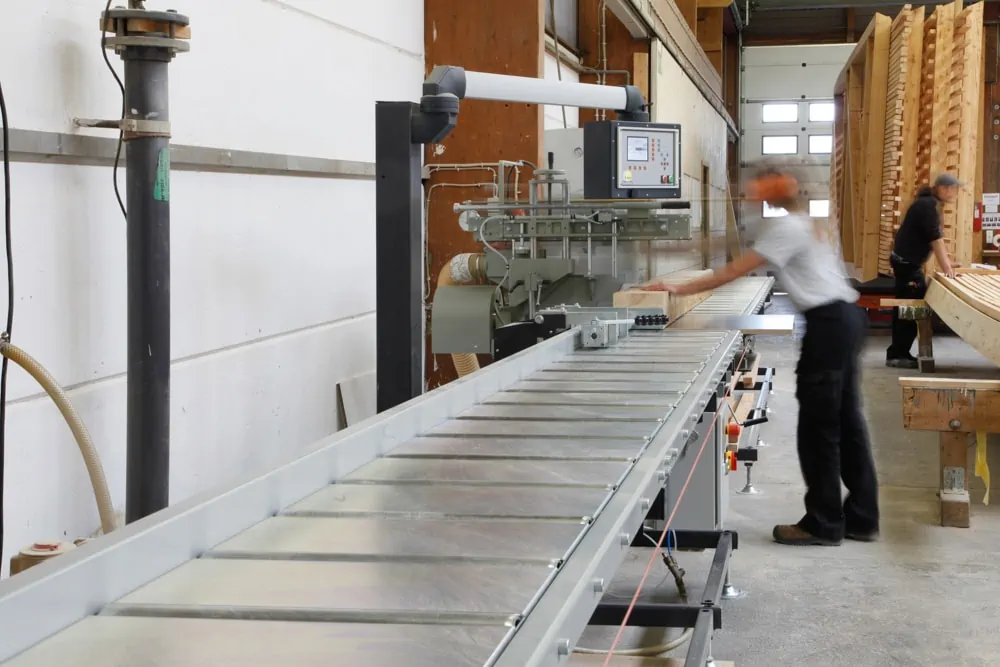
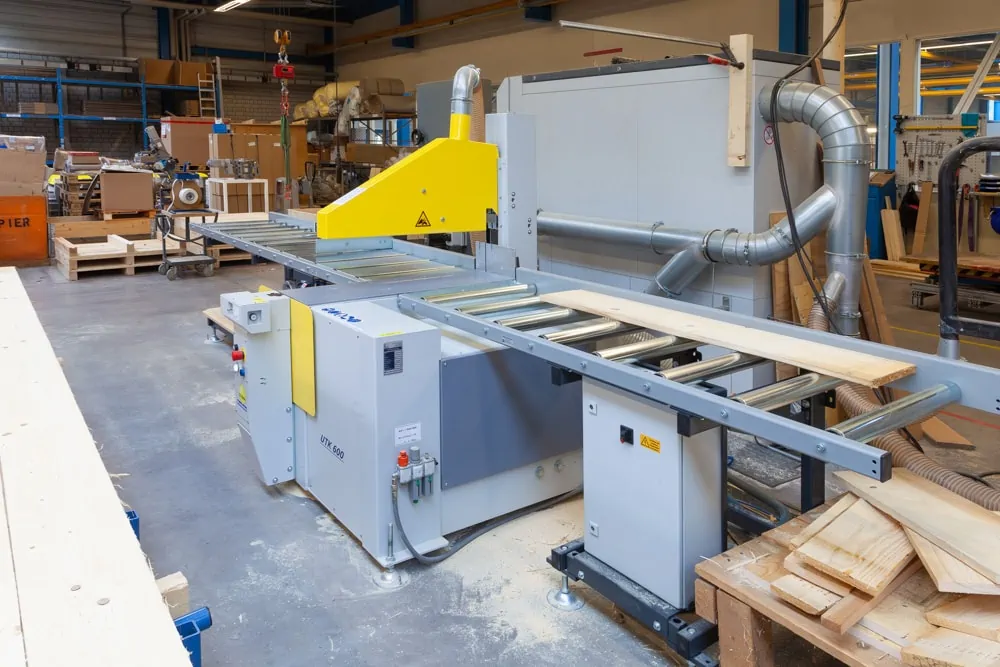
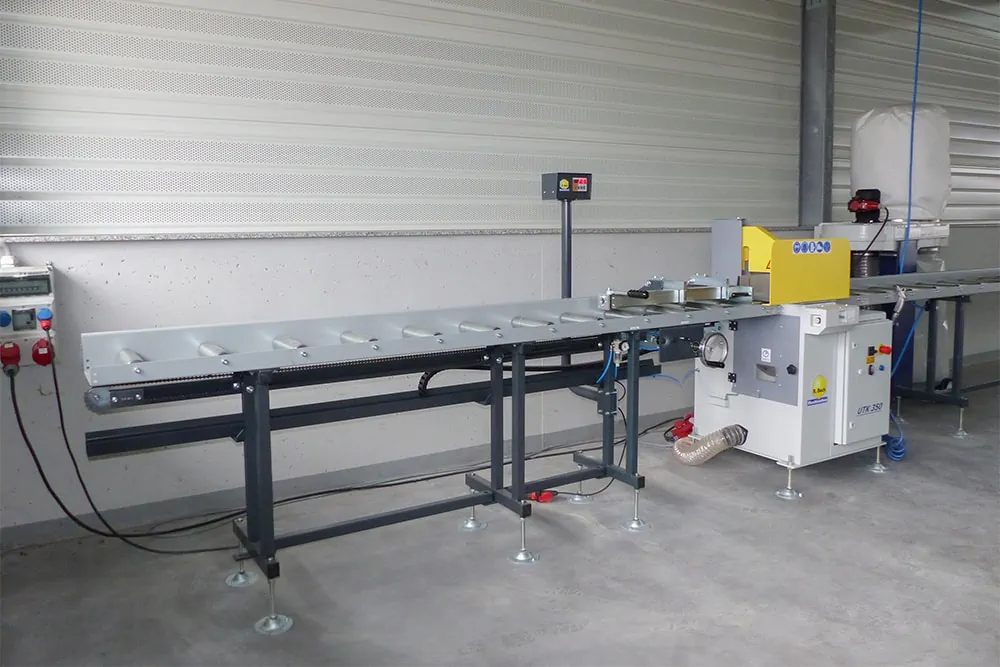
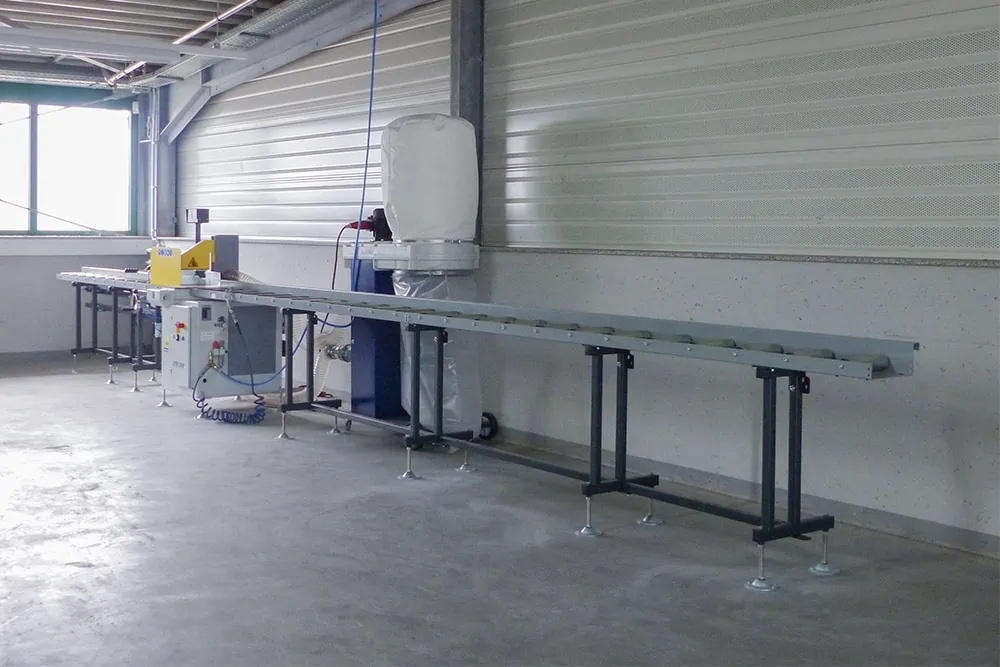
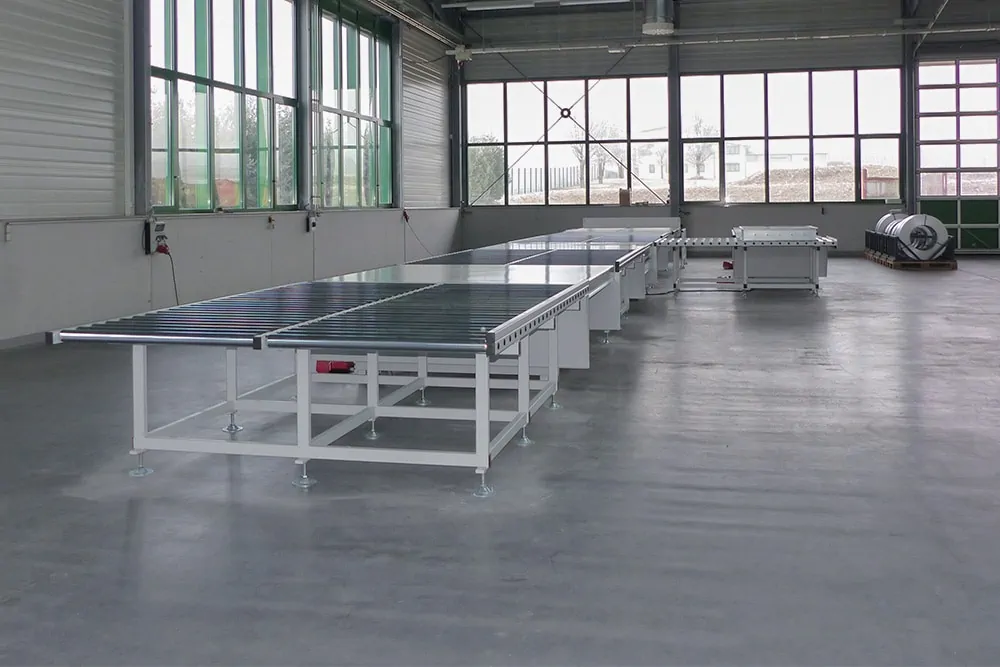
Rollen- und Messbahnen sind überall dort ein Produktivitätsfaktor, wo lange Werkstücke sicher zugeführt, exakt positioniert und reproduzierbar bearbeitet werden sollen – vom Holzbau bis zum Metall- und Maschinenbau. Ob als Rollenbahn (auch: Rollbahn) für die Materialzu- und -abfuhr, als Messbahn mit Längenanschlag oder als automatisiertes Positionier- bzw. Pushersystem: Das Ziel ist immer dasselbe – weniger Handling, mehr Prozesssicherheit und präzisere Ergebnisse.
-
For light workpieces
-
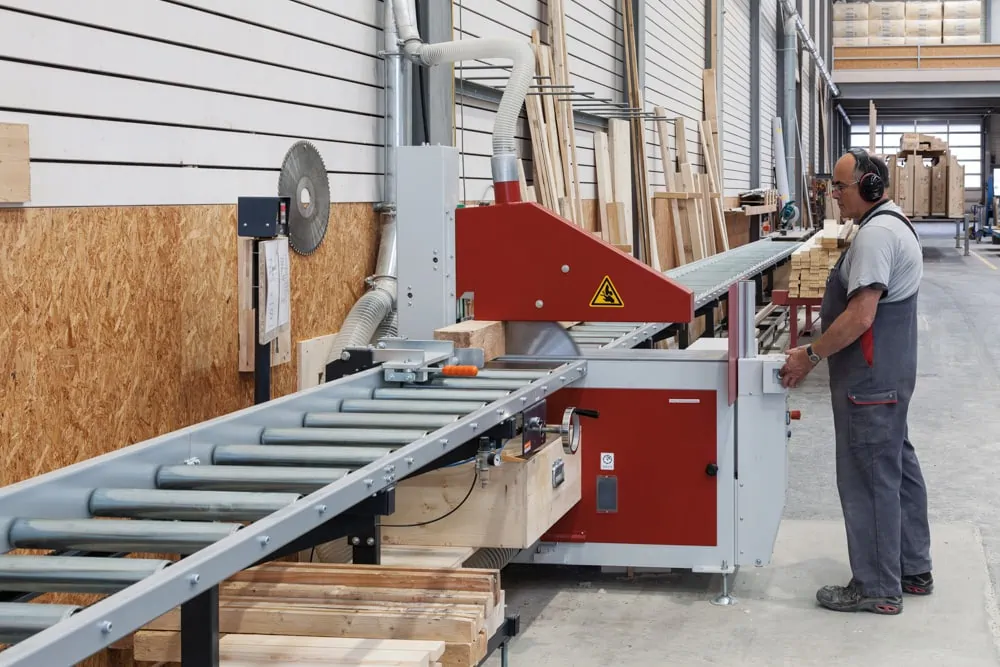
For supplementing manual processing machines
-
Length stop system for retrofitting existing systems
-
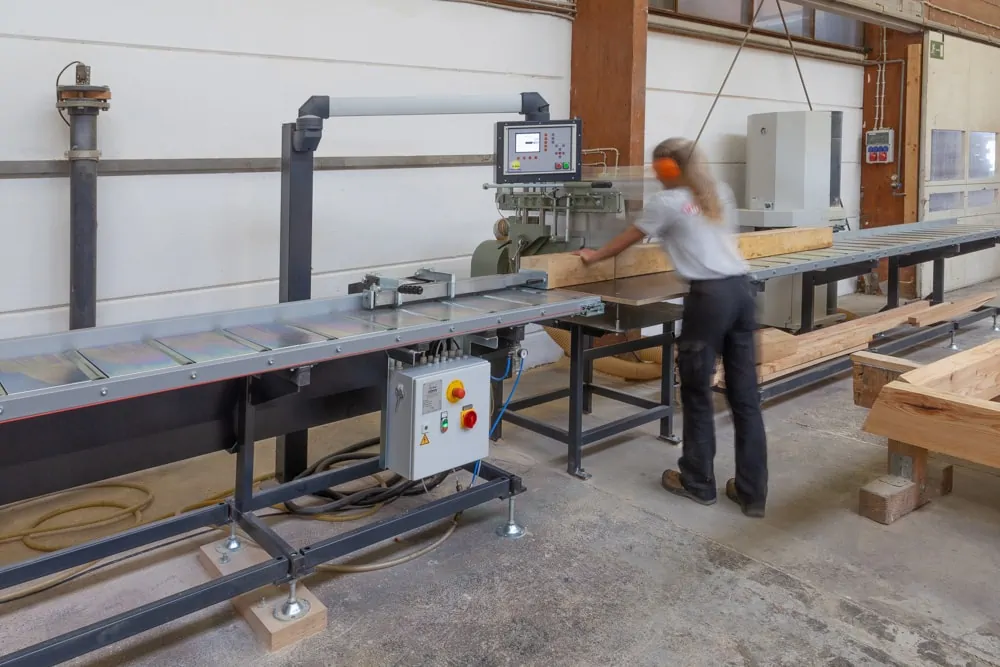
As a completely mobile variant - especially for timber construction
-
For use in carpentry and timber frame construction
-
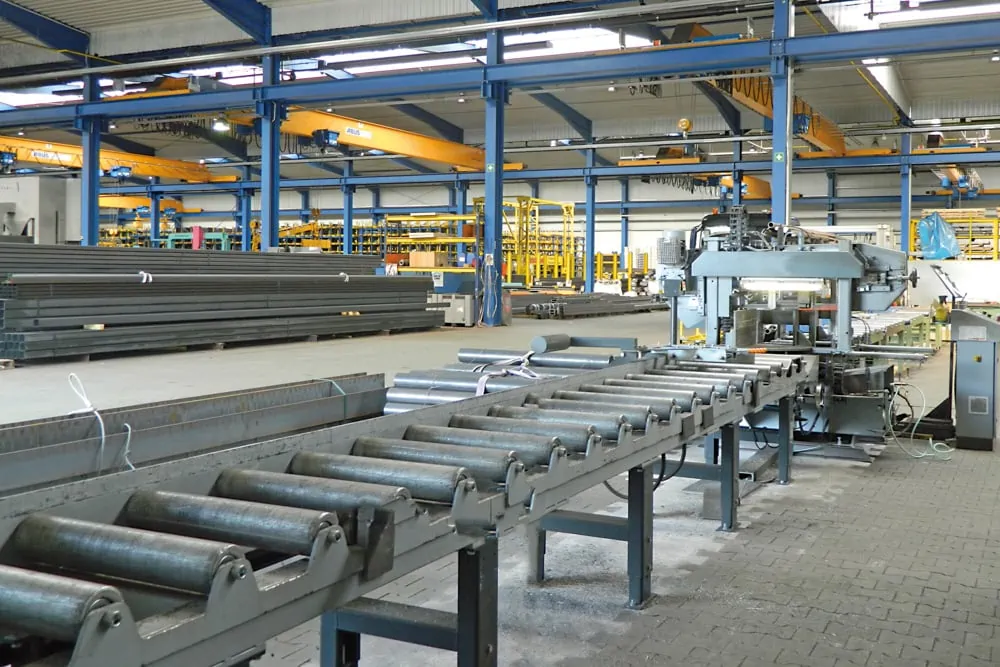
For metal, steel construction and metalworking in general
The Beck product line offers roller and measuring track systems tailored to specific applications: for lightweight profiles, for standard workshop and manufacturing processes, for heavy-duty applications in steel and metal construction, and for mobile use in wood construction. The product line is complemented by retrofit length stop systems for existing equipment, as well as automated systems when the highest repeatability and programmable processes are required.
Roller Conveyor, Roller Conveyor System, Measuring Conveyor: What's the Difference?
A roller conveyor or. a roller conveyor facilitates in-plant transport or material feeding, by guiding workpieces over carrying rollers so that they are guided through the system. In practice, it is important, that the material being conveyed has a stable support and that the system is suited to the geometry and to the weight of the material being conveyed. As soon as recurring lengths need to be set precisely, they must, the mere pure roll path becomes a measuring path: It adds a measuring system and stop to the roller track, so that cutting, drilling or milling can be performed reliably at the desired position can be performed – particularly relevant for mass production or frequently recurring cutting lengths.

EXAKT Standard
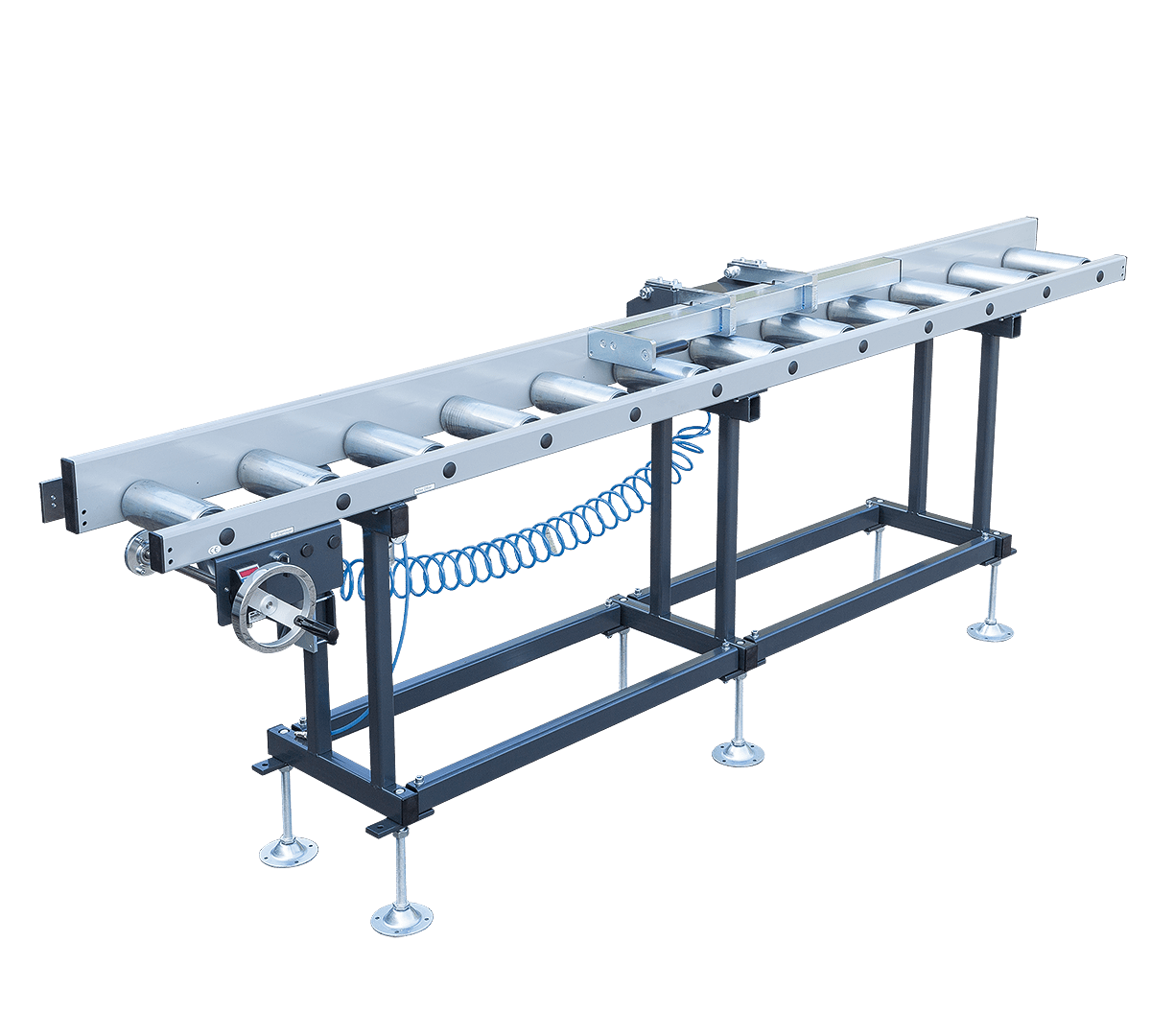
Exakt MES

Exakt ES

Exakt ES-F
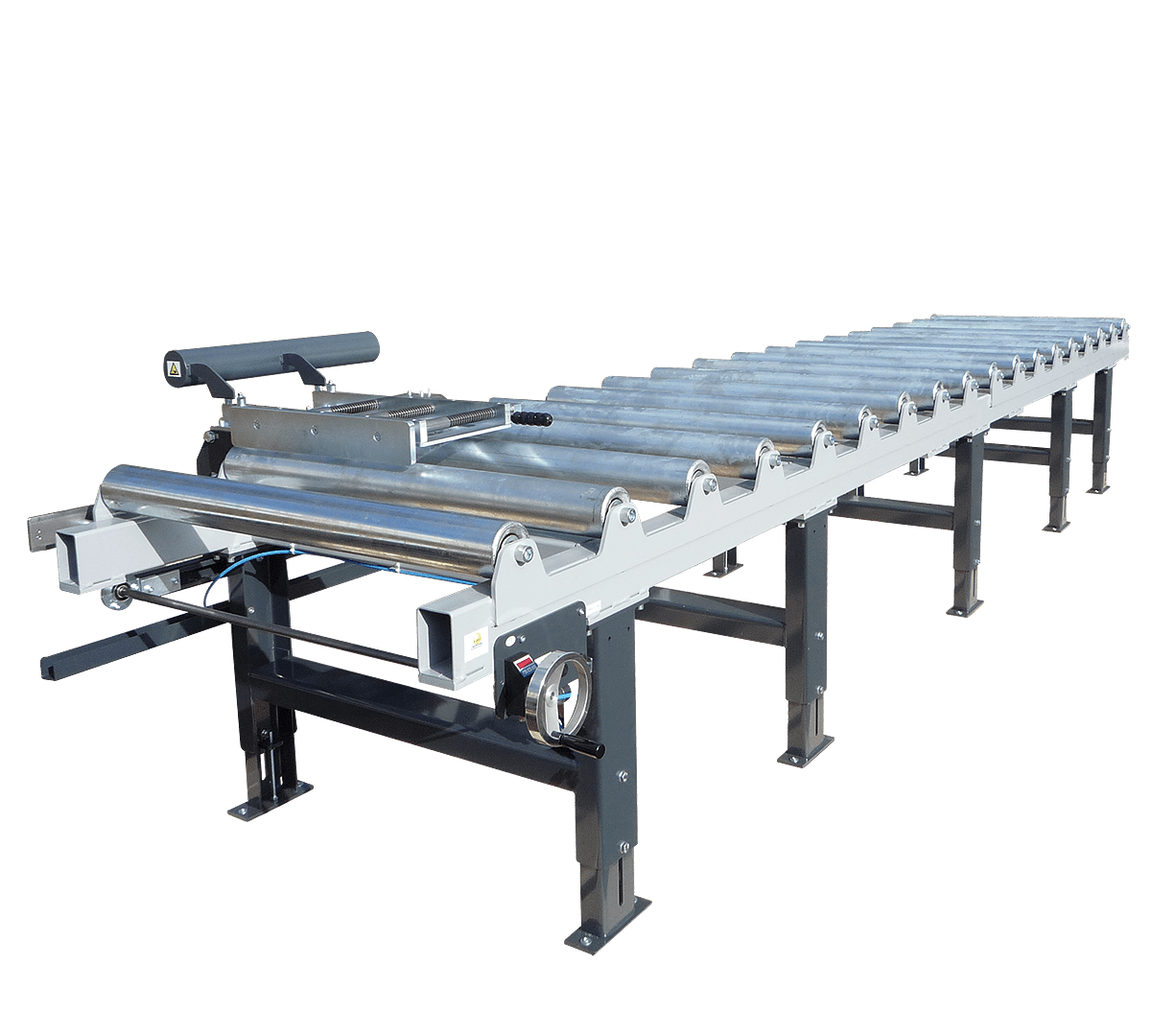
Exakt HD

Exakt LC

Exakt F

Exakt P
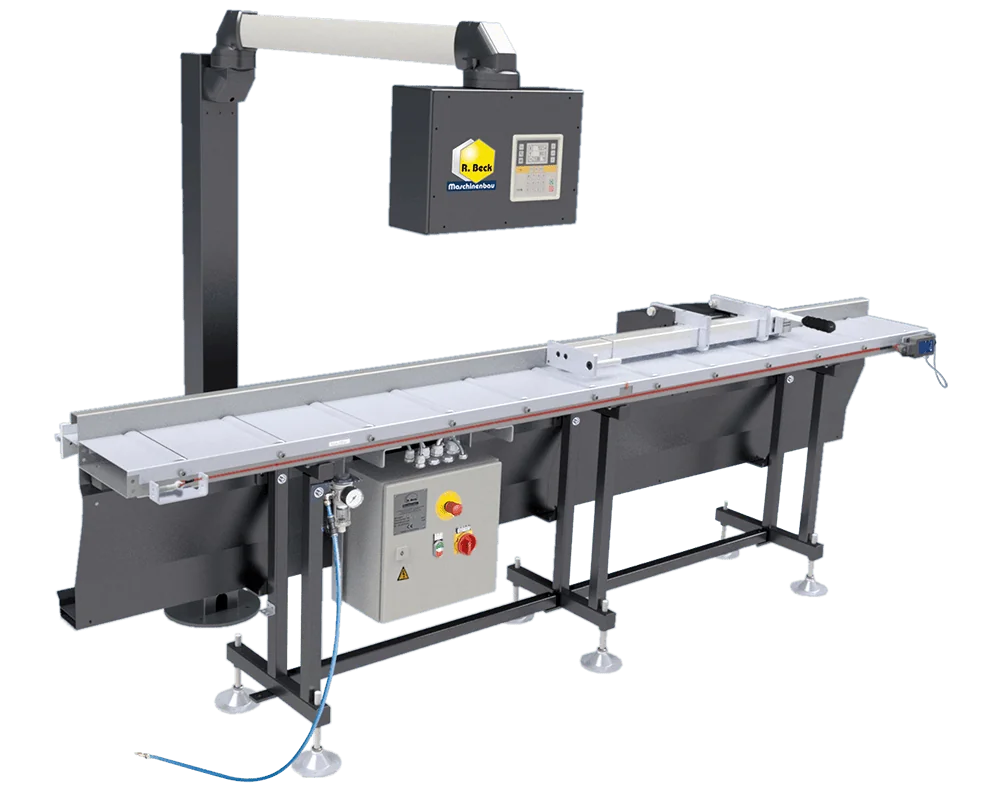
Exakt ELG/DC
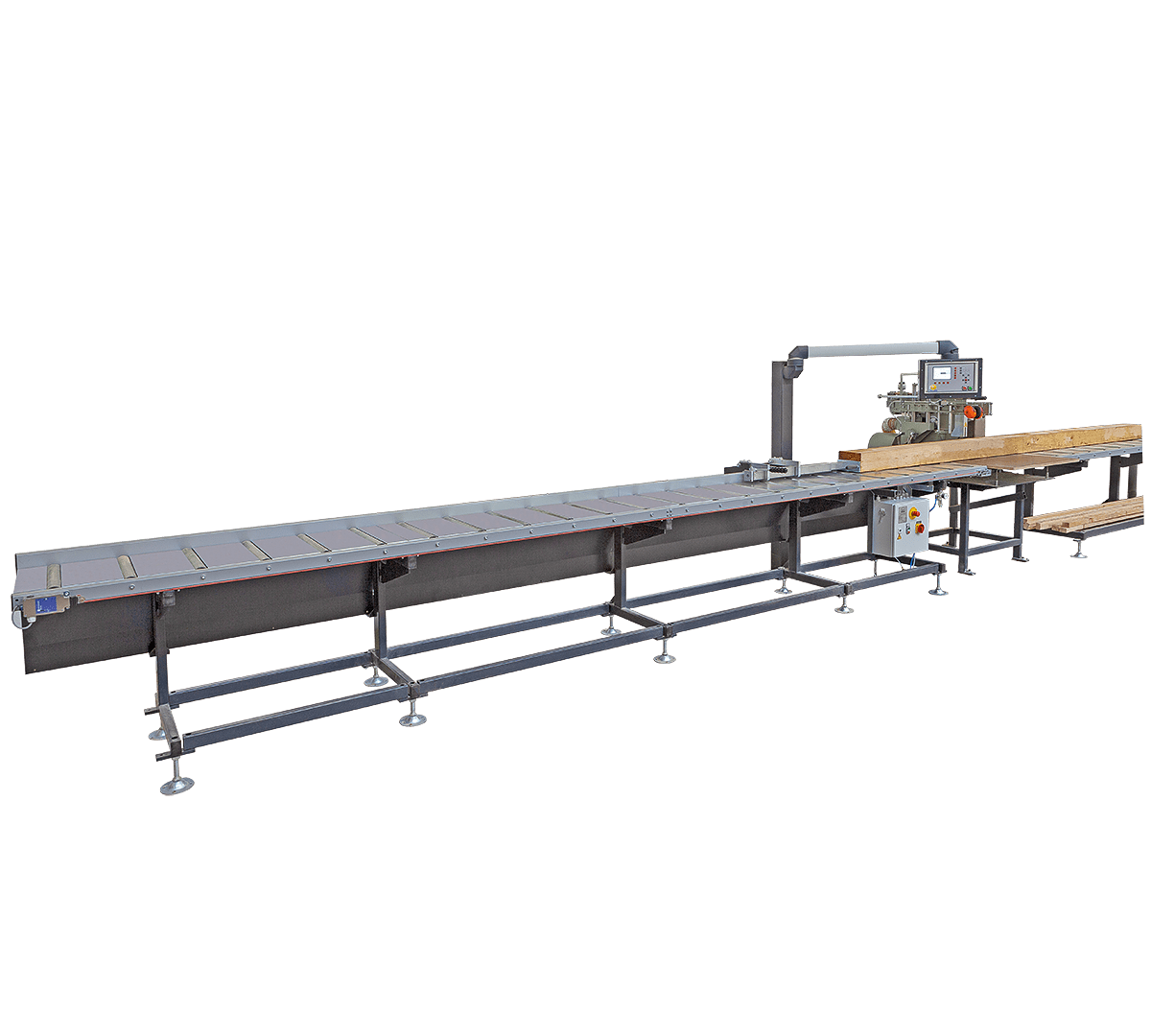
Exakt NC
Typical Roller Conveyor Applications & Industries
Roller and measuring conveyors are used when long workpieces need to be securely supported—for example, in woodworking, in everyday wood construction and carpentry, in metal and steel construction, in mechanical engineering, and in the machining of plastics. Typical applications include:
• Feed and discharge support for manual machining equipment
• Reproducible cutting (roller conveyor for saw / cutting station)
• Precise positioning of profiles, strips, beams, and frame components
• Handling of heavy workpieces (including loading via hoisting equipment, depending on the model)
• Retrofitting of existing workstations (measuring system, stop, positioning)
Overview of Rollbahn Product Groups
To help you find the right solution more quickly, roller and measuring conveyors can be broadly categorized by application and degree of automation:
1) Lightweight & versatile for workshops and profiles
If you want to precisely saw, drill, or mill lighter wood, metal, or plastic profiles, compact systems with simple measurement tools (e.g., tape measure/magnifying glass) or an optional digital display are often the most cost-effective solution.
2) Standard Systems for Wide-Ranging Use
As an all-around solution, standard roller conveyor systems combine a sturdy design with precise, fast length adjustment—ideal when frequent length changes and recurring dimensions are part of everyday operations.
3) Extra-sturdy & ergonomic for wood construction and assembly
Extra-sturdy substructures are ideal for carpentry/wood construction as well as rugged workshop environments—also available as a mobile version if work locations change (e.g., production hall and outdoor areas).
4) Heavy-duty for metal, steel, and mechanical engineering
When heavy workpieces, profiles, or assemblies need to rest securely, load capacity, roller diameter, roller spacing, and a robust welded construction are key factors. For certain applications, an open design is also advantageous to allow loading by crane or forklift.
5) Retrofit systems for existing equipment
If there is already a roller conveyor or a workbench is already present, a length stop system can be retrofitted to significantly improve process quality without entirely replacing the entire workstation – a21> – without having to completely rebuild the entire workstation.
6) Automated stop- and positioning systems
When maximum repeatability, programmable dimensions, barcode/scanner workflows, or push functions are required are needed, then automatic positioning systems are worth considering. They are particularly interesting for mass production, standardized blanks and defined material flows.
Technical Roller Conveyor Specifications Table with Typical Values/Variants
| Parameters | Typical Variants/Range |
| Payload | Approx. 100 kg/m (LC) to 800 kg/m (HD); other series typically 300–450 kg/m |
| Conveyor length | approx. 1–10 m (Standard/ES/MES), 2–12 m (HD), 2–6 m (LC) |
| Working height | e.g., 770–1,070 mm (LC), approx. 880 ± 60 mm (Standard/ES/MES), approx. 855/905 ± 75 mm (HD) |
| Conveyor belt width / effective width | typically 300/400/500 mm (Standard/ES/MES/NC/ELG); LC approx. 390 mm; HD usable width, e.g., 600 or 1,150 mm |
| Wheel diameter | approx. Ø 50 mm (LC), Ø 60 mm (Standard/ES/MES/NC/ELG), Ø 89 mm (MES), Ø 108 mm (HD) |
| Roller spacing | approx. 250 mm (Standard/ES/MES), approx. 290 mm (LC), approx. 333 mm (HD) |
| Measuring Systems | mm scale/magnifying glass; digital display; magnetic tape + display; programmable systems |
| Measurement accuracy (depending on model) | Examples: ±0.5 mm per meter (several models); ±0.1 mm per meter (magnetic tape models); ±0.20 mm (LC-E) |
Buying Guide: How to Choose the Right Conveyor Belt
Choosing the right roller conveyor isn’t determined by “a single number,” but rather by the interplay between the material being conveyed, the process, and the workstation.
Start with these guiding questions:
• What is being processed (material, cross-section, length, weight)?
• Which machining tool is being integrated (saw, drilling/milling station, etc.)?
• Do you only need support/transport—or a measuring system with a stop?
• How often do the lengths change (single part vs. production run)?
• Is mobility required (changing work locations / outdoor use)?
• Is manual operation sufficient—or is automation worth it?
Buying Guide/Checklist
- Workpieces & Process: What workpieces (material, length, cross-section) and what machining operations (sawing, drilling, milling)? Beck explicitly identifies roller/guide rail systems as essential for ensuring that machining tools can operate with precision.
- Correctly Classify the Load Capacity: Is the load capacity specified in kg/m (as is typical for such systems), and what margin do you need to account for future workpieces?
- Roller Spacing & Support: Ideally, the bottom/cross-section of the material being transported should rest on at least three rollers at the same time (rule of thumb).
- Track width: Select the track width and usable idler roller width so that the largest workpiece is guided securely, including lateral clearance.
- Choosing a measuring system: Is a mm scale/magnifying glass (fast & durable) sufficient, or is a digital display/magnetic tape more practical (fast reading, greater accuracy depending on the model)?
- Measured length vs. conveyor length: Allow for measured length offsets (the measured length is often shorter than the roller conveyor length).
- Mobile or stationary: Do you need a mobile solution (e.g., for changing work locations, outdoor use), or would a stationary workstation be more appropriate?
- Drive/Automation: Are we talking about transport drives (conveyor technology) or automatic positioning/pushing at the machining station? Various drive concepts are used in conveyor technology (from gravity to motorized rollers).
- Required accessories: Side guides, stops, cover plates, arm retraction, measuring systems, custom working heights—determine these early on, as they directly affect process quality and safety.
Personal Consulting & Quick Guidance for your career path requirements
If you provide us with the key specifications (workpiece, length, weight, machine, desired level of measurement/automation), we can recommend the appropriate product group and tailor the solution to your workstation. Feel free to use the catalog download or send us an inquiry—we’ll get back to you shortly.

Your contact person:
Klaus Blocherer
Distribution & Logistics
Frequently Asked Questions about the topic of roller conveyors
What is the difference between a roller conveyor, a roller track, and a roller conveyor system?
In common usage, the terms "roller conveyor" and "roller track" are often used interchangeably; "roller conveyor" is the general term for conveyor/roller tracks. Measuring tracks include a measuring/stop system to allow for reproducible position adjustment.
When is a feed/discharge roller conveyor sufficient without a measuring system?
If the primary focus is on placement/handling and the feeding or removal of material (e.g., as a feed roller conveyor), rather than on precise repeatable dimensions, Beck includes such “non-measuring system” variants in its system logic.
How do I choose the right roller spacing?
As a rule of thumb, the material being conveyed should ideally come into contact with at least three rollers simultaneously at every point; the center-to-center distance and the minimum size of the material being conveyed are derived from this.
Which rollers for roller conveyors—steel or plastic?
The choice of roller material depends on weight and environmental conditions. Competitors explain, for example, that roller material and roller diameter influence material flow and cite steel and plastic as typical options.
Which roller conveyor for a saw is typical in the trades?
For recurring cut lengths, it is advisable to use a measuring track/length stop; Beck offers mobile and timber-construction-oriented variants (e.g., ESF) as well as standard solutions as precise stop/measuring systems
Which roller conveyor is suitable for pipes or structural steel?
For solid and profiled materials, heavy-duty versions are explicitly offered on the market; key factors include a stable support surface, sufficient width, appropriate roller spacing, and, if necessary, side guides.
Gravity-fed or powered roller conveyors—which is better?
For simple transport logistics, gravity-fed solutions may be sufficient; kaiserkraft describes gravity-fed operation, for example, at a 2–5 % incline. For processes with defined cycle times or positioning, motorized or driven concepts or automation systems may be considered.
How do they differ automatic positioning systems from “powered roller conveyors”?
In material handling, “driven” often refers to the transport drive (e.g., motorized roller). In contrast, Beck uses the terms NC, ELG, and DC primarily to describe automatic stop/positioning functions (and, in the case of NC, also a pusher system) for precise, programmable sequences.
Why is the measured length often shorter than the conveyor belt length?
Depending on the design, the stop carriage or stop mechanism requires a structural offset; Beck specifies such offsets for each model (e.g., track length minus a defined number of mm).
What standards or regulations are relevant to the safety of roller conveyors?
EN 619 is a key reference for mechanical conveying systems (DIN EN 619:2022-07 specifies safety and design requirements). Information from the DGUV identifies pinch and shear points and access control as core risks.
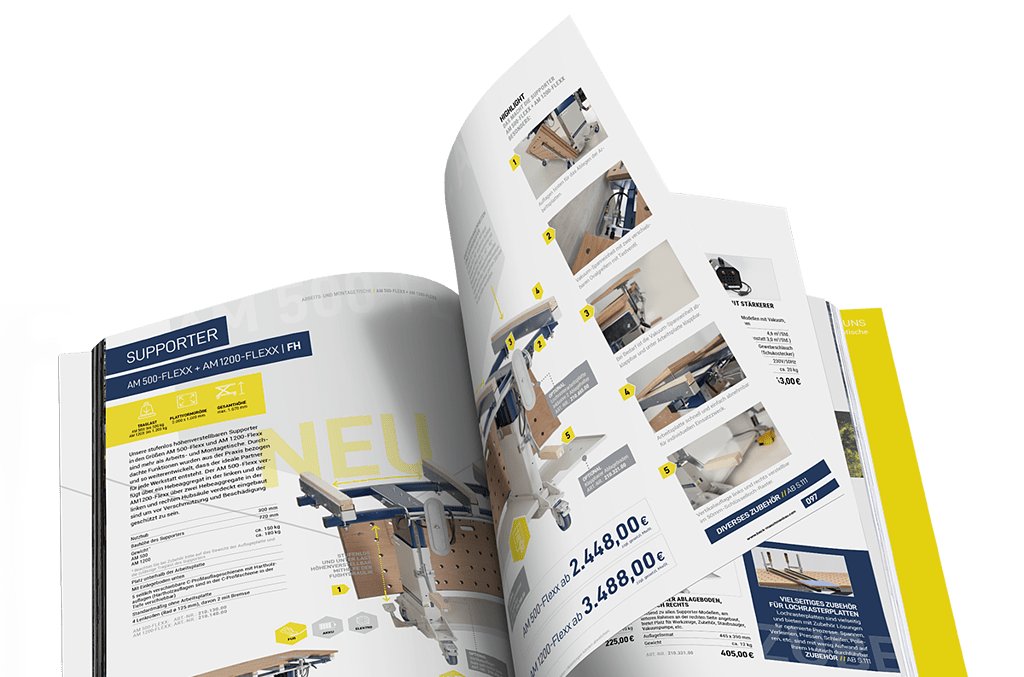
OUR NEW
2026 CATALOG
NEWSLETTER
SUBSCRIBE
BECK PRODUCTS
IN THE ONLINE SHOP
-
Lifting
-
Lowering
-
Conveying
-

Rotating
-

Tilting
-

Swivelling
Lifting
Lowering
Conveying
Rotating
Tilting
Swivelling