

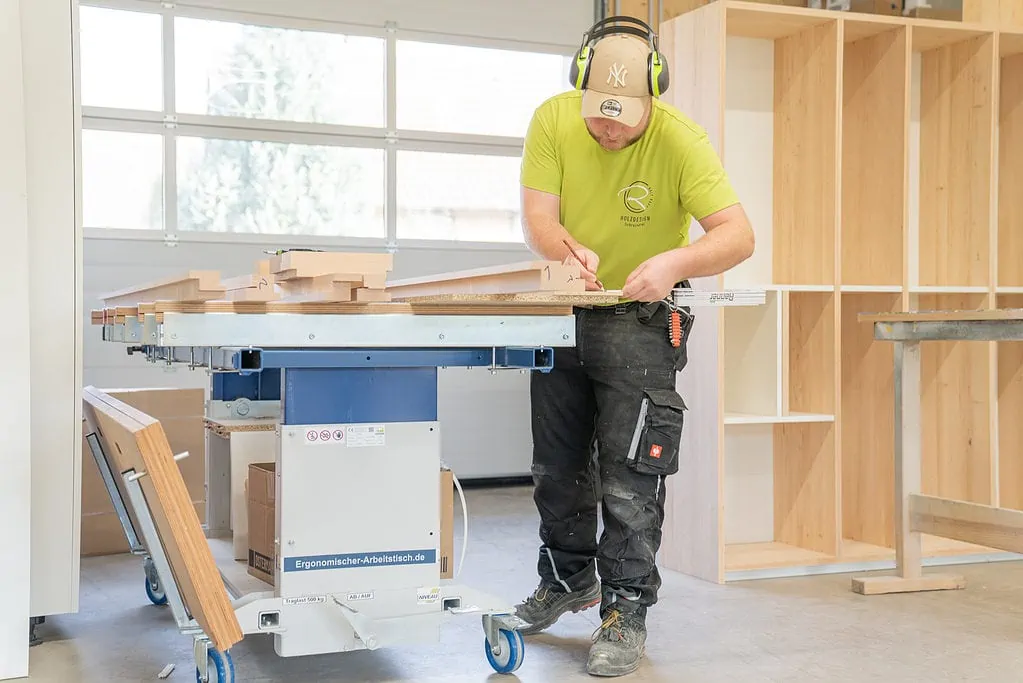
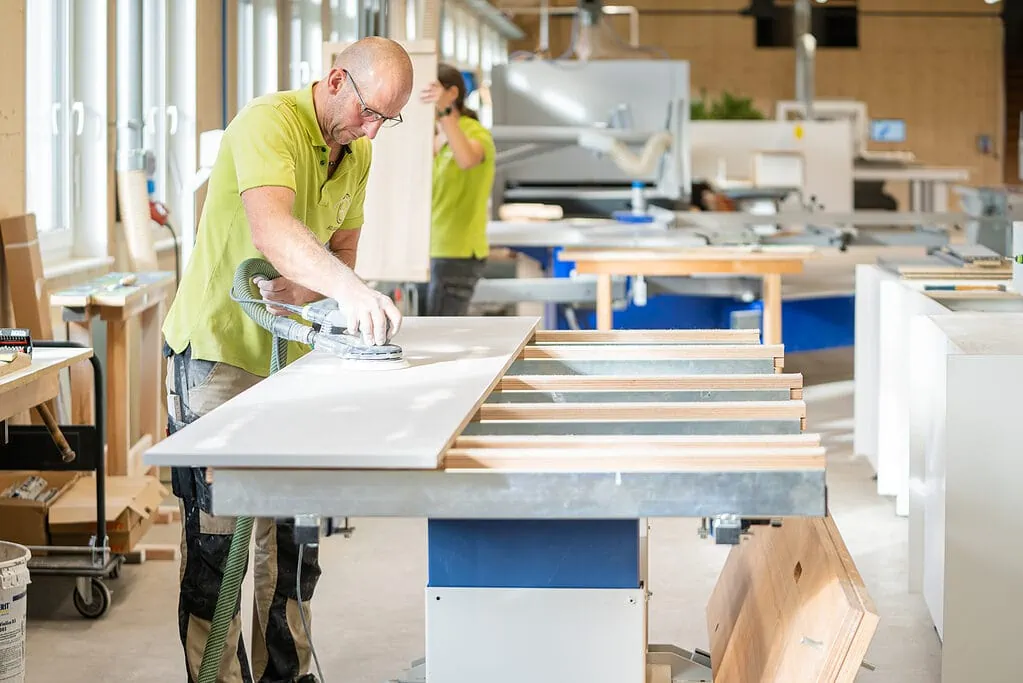

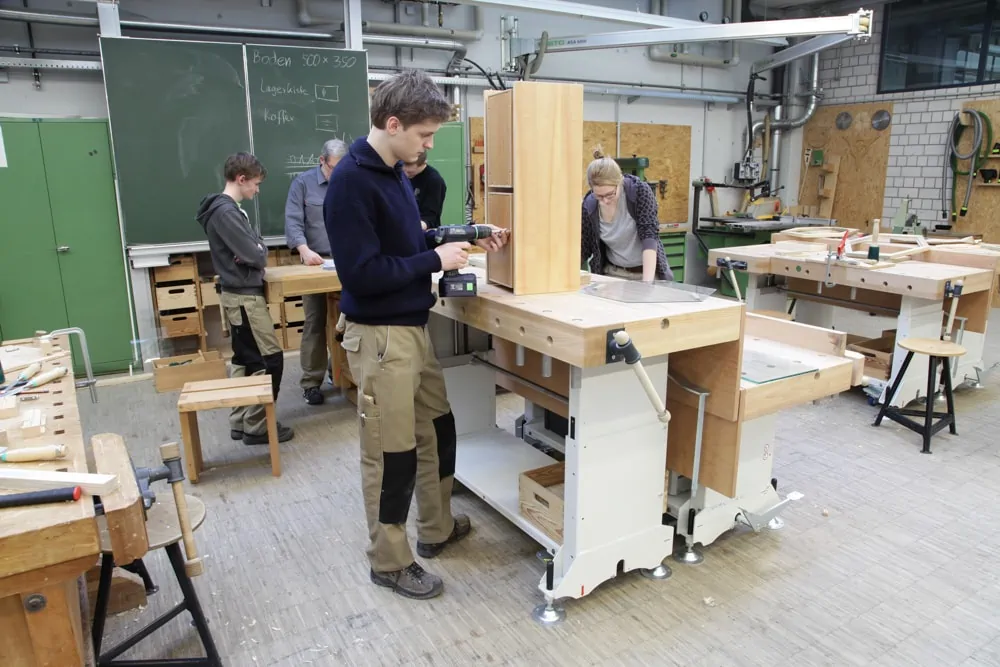
The Supporter and ErgoPlan models were specially developed for manual workstations in production, assembly and maintenance. These are workplaces that place particular physical demands on employees. Musculoskeletal disorders are at the top of the list of widespread diseases.
Supporter and ErgoPlan were developed based on scientific findings.
Incorrect posture and lifting heavy loads are usually the cause of this clinical picture, which can be found in all professions. Older employees are not the only ones affected; younger employees are increasingly suffering from these symptoms. Back pain among employees is also the reason for increased absenteeism: due to back disorders, employees stay away from the workplace for more than 10 days on average. Work desks that can be unconditionally adapted to the current situation are the solution.
The different models of the Supporter and ErgoPlan series cover a wide range of applications. Thanks to their special design, the workbenches are indispensable for an ergonomically optimised workplace. An additional and extensive range of accessories also allows even better adaptation to different applications.
-
Height adjustment under load
-
Uniform adjustment to height even under uneven load distribution
-
Stable and robust castors
-
Side walls provide stability and protect the mechanics
-
High-quality drives on both sides
-
Table top moves absolutely parallel and smoothly
Work tables for industry and workshops: Ergonomic, flexible solutions
Workbenches are indispensable in industrial work environments. Whether in a production hall, an assembly shop, or a laboratory—a high-quality workbench provides the foundation for efficient, safe, and comfortable work. In many industries, workbenches are also referred to as work tables or assembly tables. While this term often refers to sturdy workbenches, modern workbenches are additionally characterized by height-adjustable and flexible features. Below, you’ll learn about the different types of workbenches available, what to look for when selecting one, and how such workbenches can improve ergonomics, productivity, and safety in your workplace. We’ll explore aspects such as height adjustment (manual, electric, hydraulic), mobility (work tables with casters or mobile work tables), materials, load capacity, special variants (e.g., ESD work tables), and the long-term benefits for your business.

EU PATENT
Height-adjustable work and assembly table

Supporter
AM 500 + AM 1200
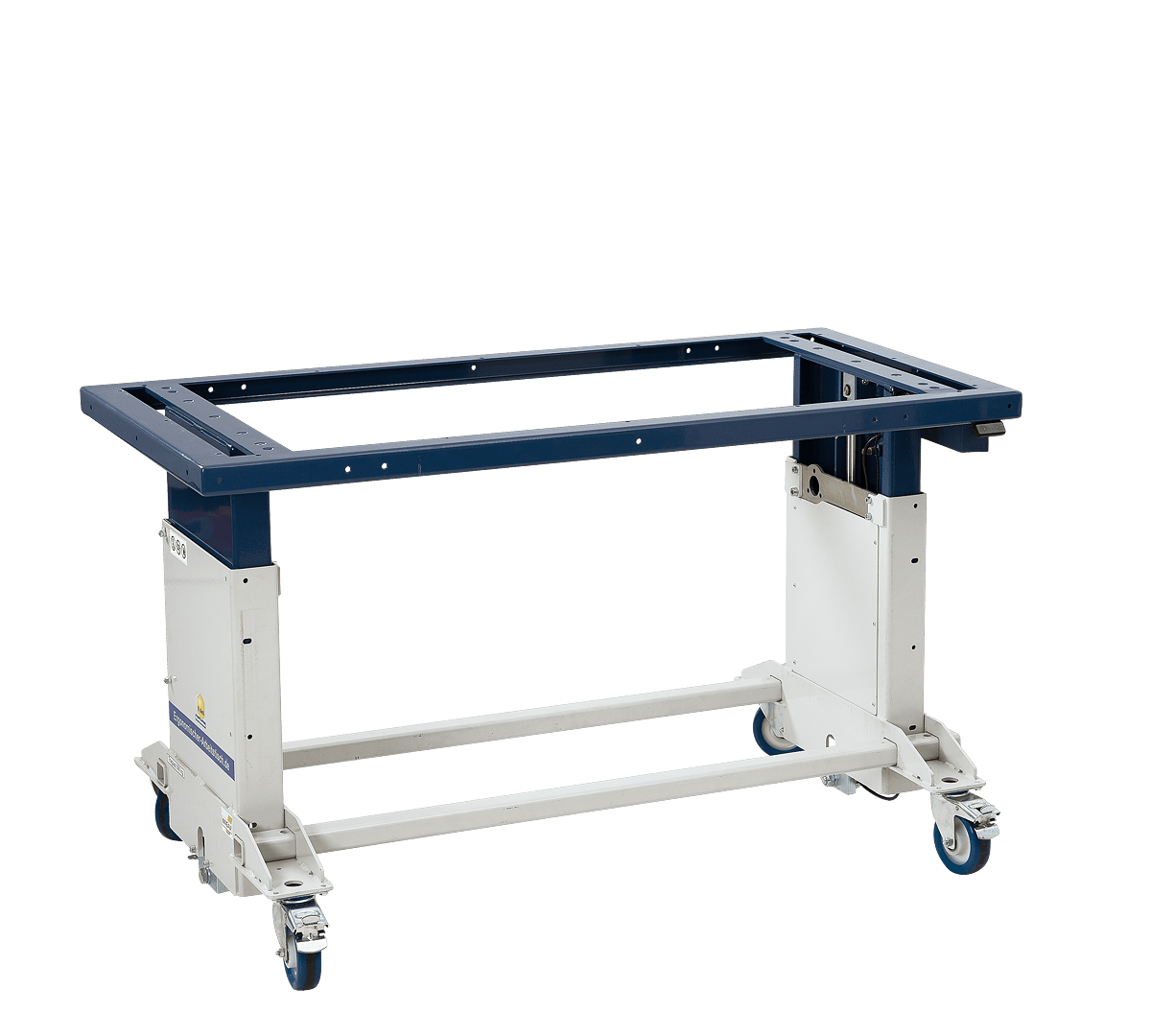
Supporter
AM 400 ESA + AM 500 ESA
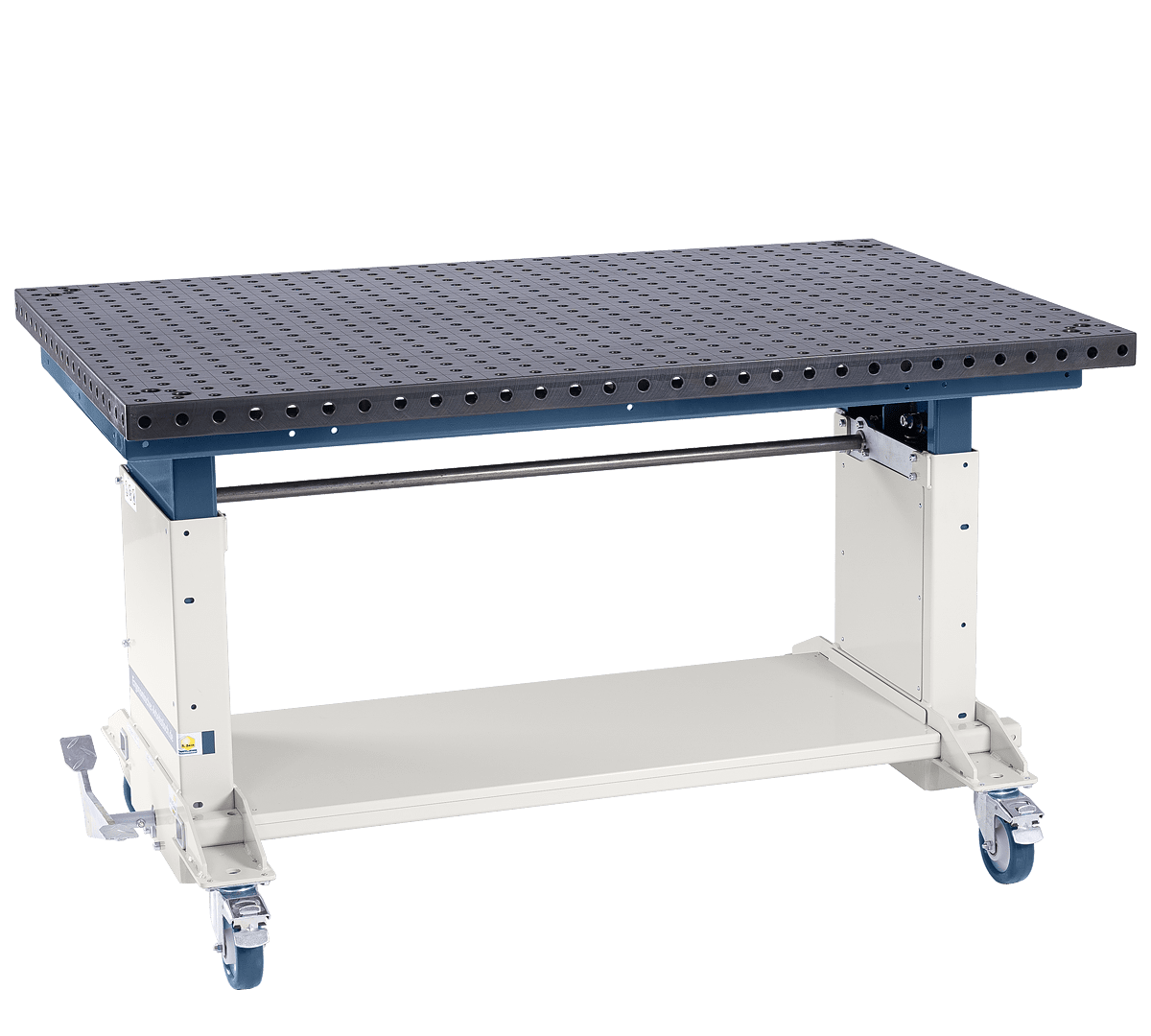
AM 500

Supporter AM 500 DUO

Supporter AM 500 VARIO

Supporter AM 500 ASSEMBLY TOP 1

Supporter AM 500 ASSEMBLY TOP 2

Supporter AM 500 ASSEMBLY TOP 3
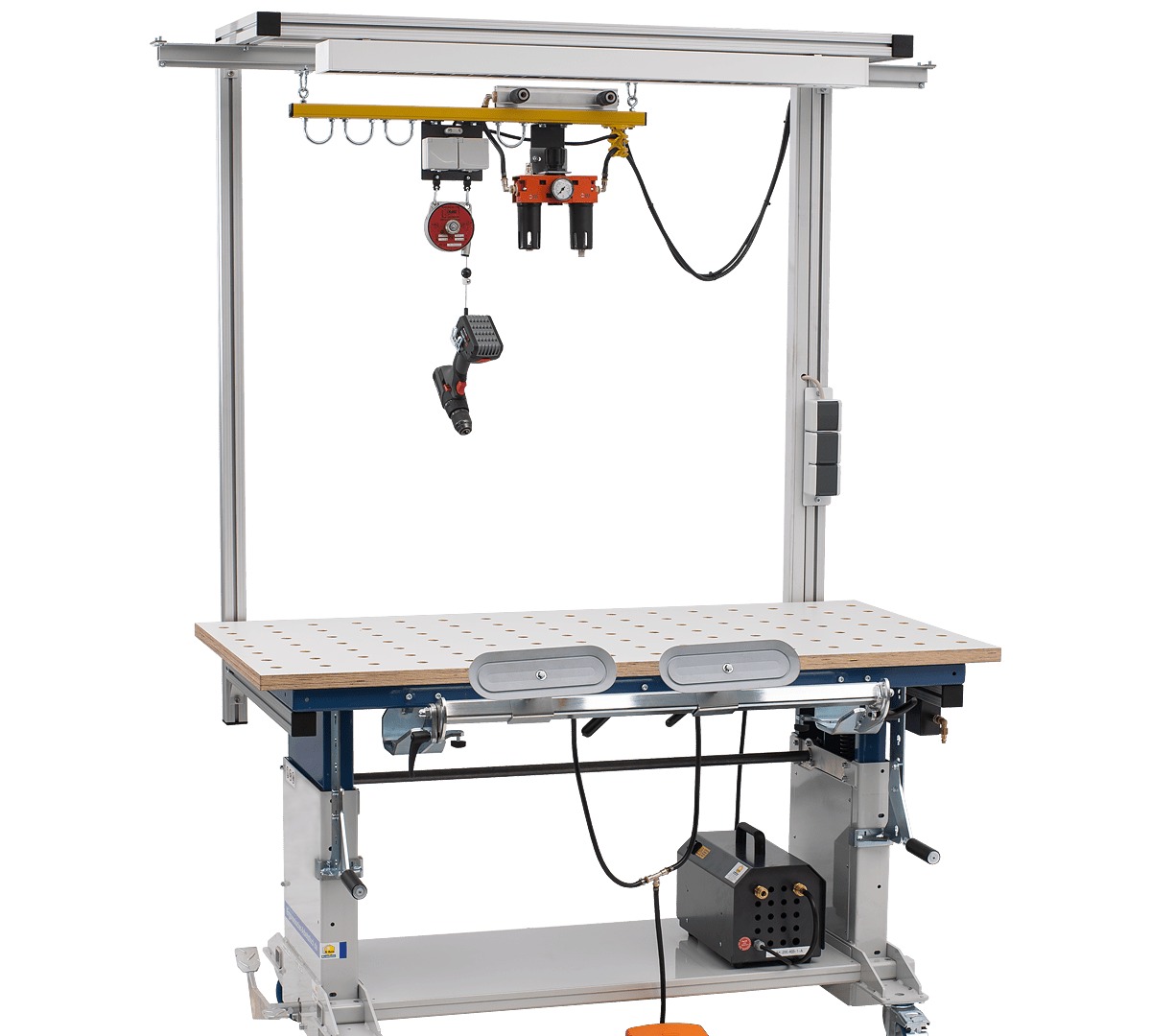
AM 500 Perfekt

NEW:
Supporter Flexx
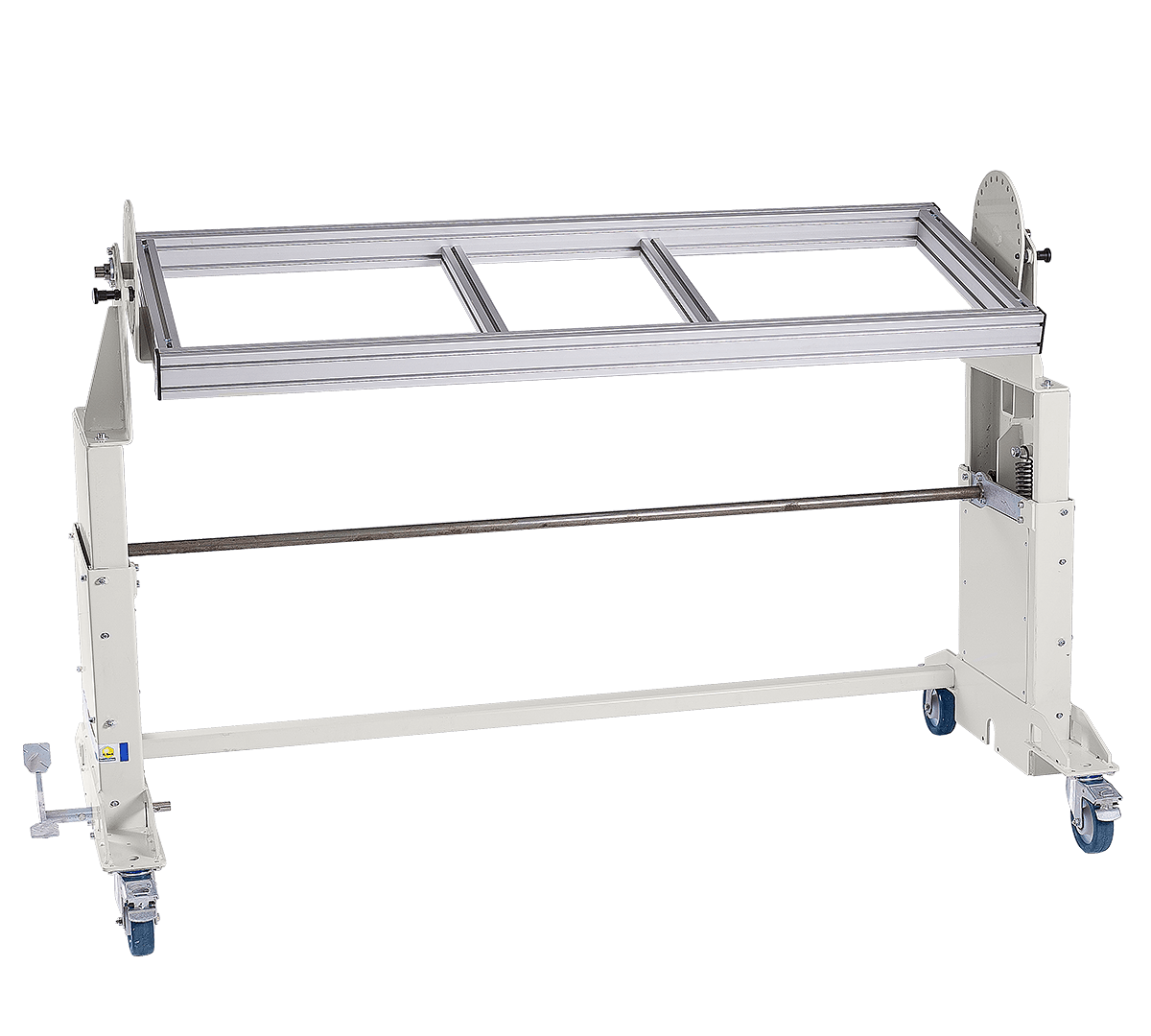
SUPPORTER Rotor
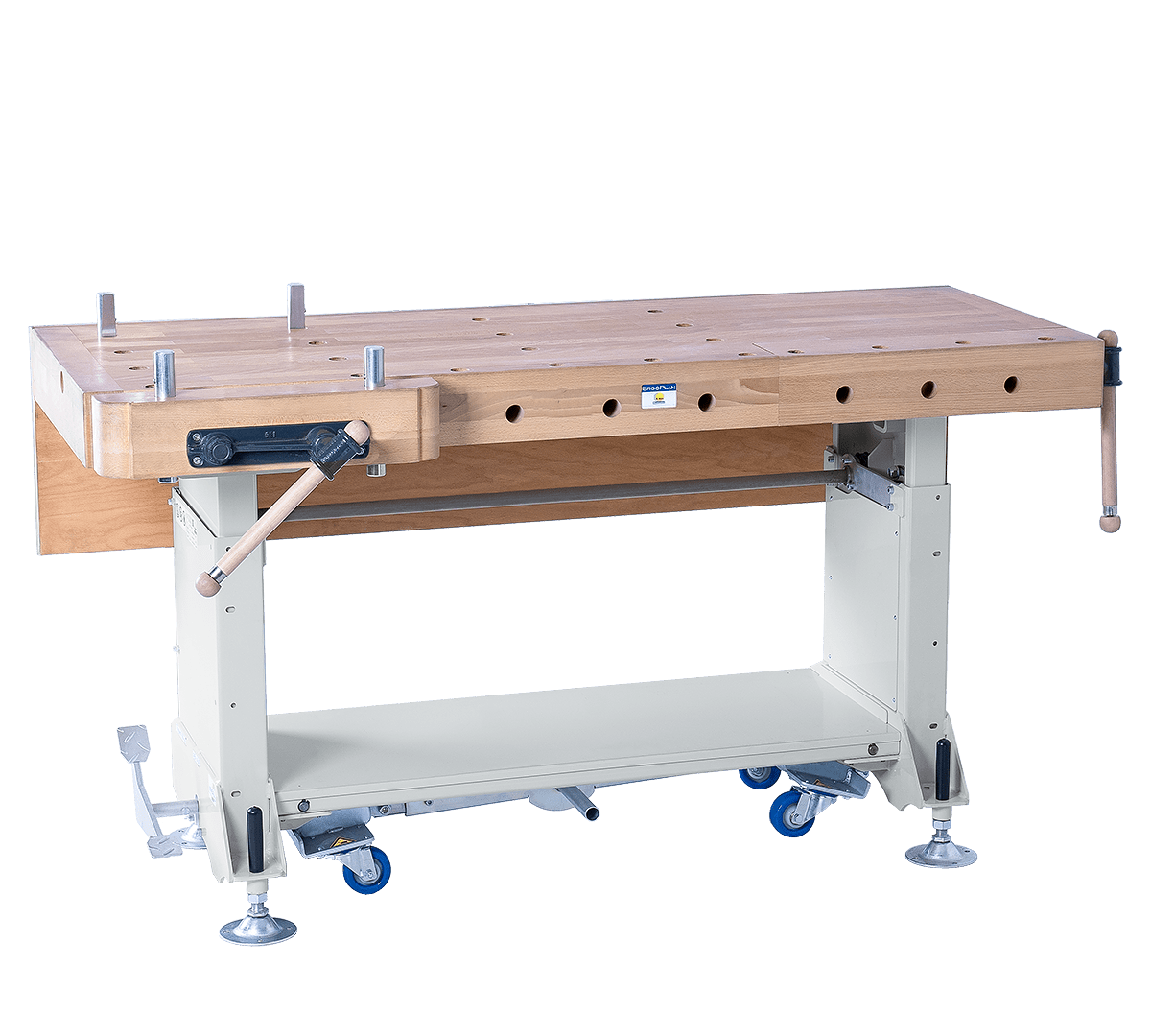
ErgoPlan EP1
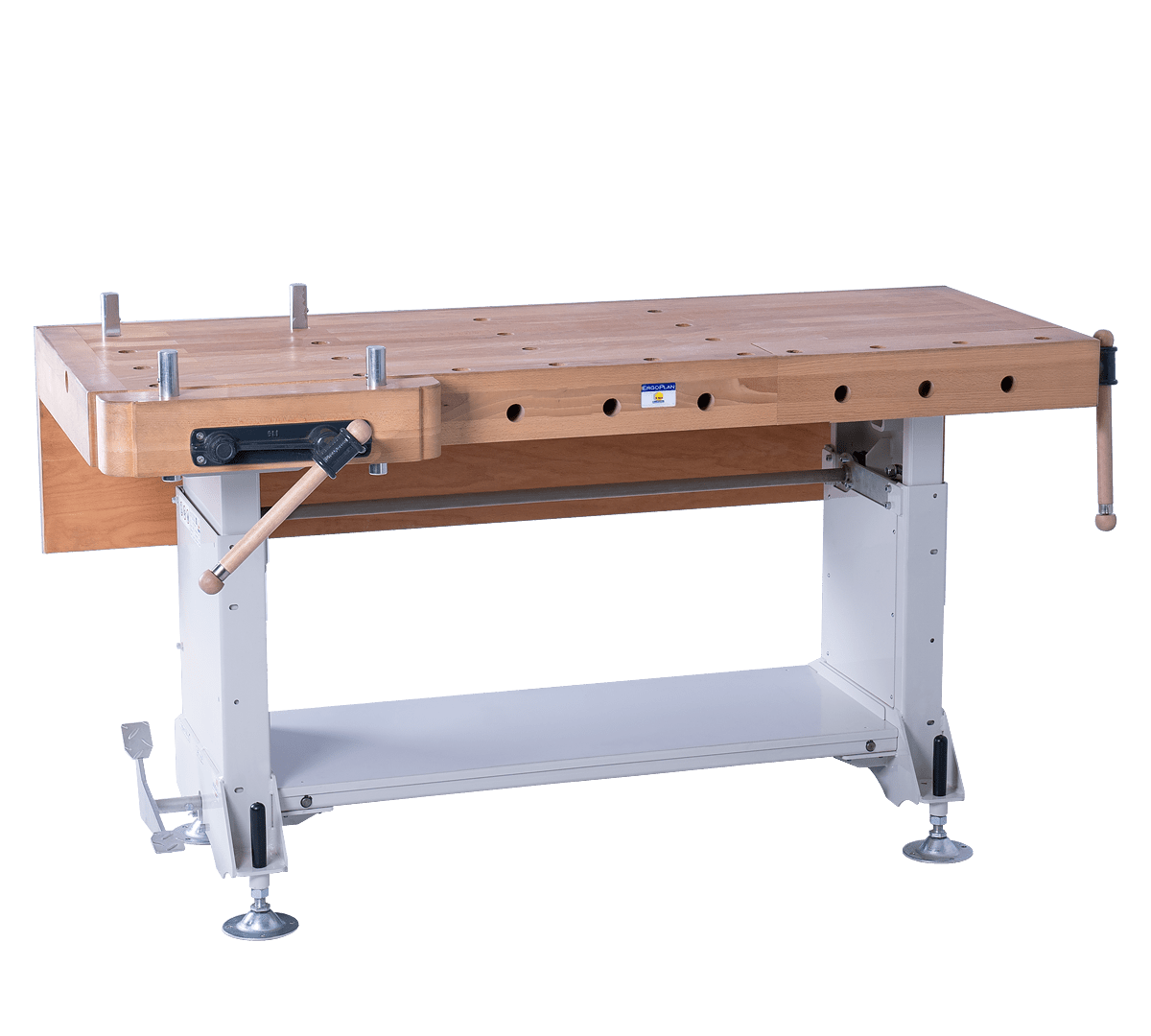
ErgoPlan EP2
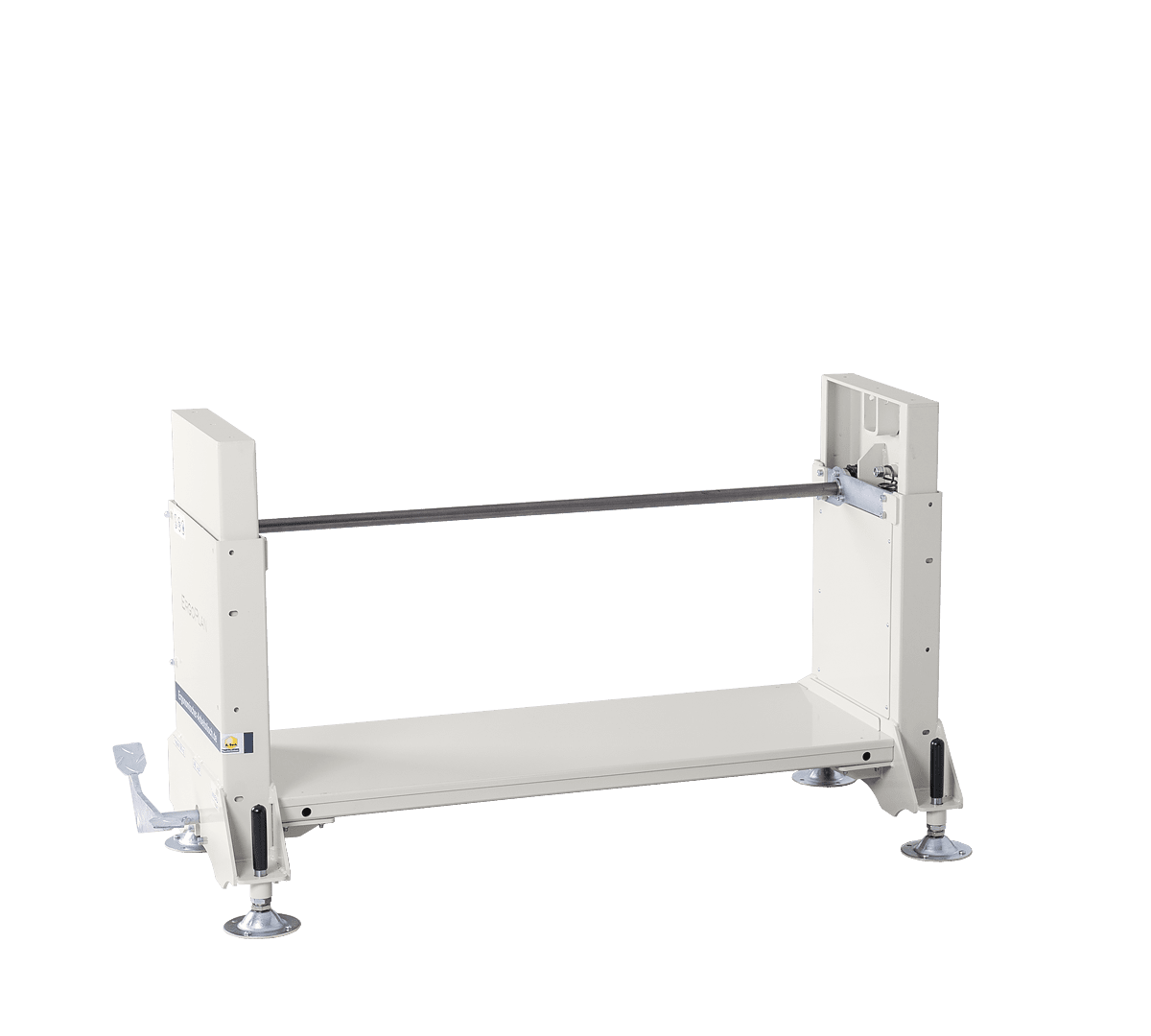
ErgoPlan EP3

SANDING TABLE BEVENTA AM 500

SUPPORTER AM500 TILTER

AWT – 250 S
Relevance and advantages of work tables and workbenches in industrial work environments
Workbenches play a central role in industry and trade. They serve as a stable work surface for assembly, repair, testing, or packaging. A suitable workbench allows workpieces to be processed safely and tools to be organized within easy reach. The right workbenches are crucial in both workshops and production facilities, because a work surface that precisely meets the requirements of the task at hand noticeably increases employee productivity and efficiency. The use of optimized workbenches speeds up work processes, reduces errors, and increases the quality of results. They also contribute significantly to ergonomics and occupational safety, for example by enabling back-friendly working. In short, a high-quality industrial workbench is an investment in smooth processes, satisfied employees, and high product quality.
Height-adjustable workshop workbenches:
In many workshops today use height-adjustable work tables and workbenches to adapt flexibly to different tasks and employees. For example, delicate precision work can be carried out while seated and strenuous assembly steps can be carried out while standing at the same table without compromising on working height. This improves working comfort and enables more precise, efficient work. An adjustable work table also proves advantageous in changing teams, as each employee can quickly adjust the table to the optimal height for them.
Ergonomics at the workbench: Workbench for health, comfort, and productivity
Ergonomics is a key argument in favor of modern work desks. Musculoskeletal disorders—especially back pain—are among the most common causes of absenteeism in physically demanding occupations. Studies show that ergonomically designed workplaces save time, reduce error rates, and lower sick leave. This means that people who work in an ergonomically designed environment make fewer mistakes and are less likely to take time off due to health problems. Companies benefit twice over—through higher efficiency and fewer sick days.
Height-adjustable work tables and workbenches make a decisive contribution to ergonomics in production and workshops. They allow users to switch between sitting and standing working positions, which relieves strain on the spine and prevents repetitive strain injuries. This significantly reduces the risk of back problems. At the same time, employees are more motivated and focused when they do not have to remain in uncomfortable positions. A height-adjustable work table can be continuously adjusted to the individual's height and the task at hand – whether it's assembly, packaging, or testing. This allows employees to always work in the optimal posture for them, which maintains their health in the long term and secures the workforce for the future.
In addition to height adjustment, other ergonomic details also play a role: sufficient legroom under the table, glare-free lighting at the workplace, and the correct arrangement of tools and materials on the table surface. All of this contributes to a holistically ergonomic assembly workplace. It is important that the work is adapted to the person – not the other way around. A good work table provides the basis for this by being flexibly adjustable and expandable with suitable accessories. Companies that focus on ergonomics create a real win-win situation: employees benefit from better health, and the company benefits from greater efficiency.
Load capacity and stability: The basis of a safe workbench
In industrial environments, workbenches must be able to withstand high loads. Depending on the area of application, they carry workpieces, fixtures, or machine components—some of which are very heavy. That is why load-bearing capacity and stability are fundamental characteristics of a good workbench. The standard load capacities of many models range from around 300 to 500 kg, while heavy-duty workbenches can sometimes handle even higher loads. It is important not to exceed the specified maximum load capacity in order to ensure the longevity and safety of the table.
A robust construction is evident in high-quality materials and solid workmanship. The frame of an industrial table is usually made of powder-coated steel or aluminum profiles. Thick-walled square tubes and struts ensure that the table does not wobble or bend even under full load. Stable worktops made of multi-layer wood (e.g. solid beech wood) or a special coated composite panel prevent deflection and are often oil and scratch resistant. For special requirements, sheet steel tops or HPL laminates are also available, which are chemical-resistant and easy to clean. This ensures that the surface remains intact and safe to use for a long time, even under intensive use.
A safe work table also has well-designed safety features. For height-adjustable models, for example, a reliable locking mechanism or brake is crucial to prevent the table from moving or lowering unintentionally. High-quality electric lift tables often have collision protection (stop function when resistance is encountered) and emergency stop switches. Work tables with casters should have lockable brakes on all steering wheels to ensure stability during stationary work. Manufacturers also pay attention to rounded edges and covers on moving parts to minimize the risk of injury. All these measures ensure that the table can be operated safely even in harsh industrial environments and that occupational safety requirements are met. After all, a work table that wobbles or is overloaded poses a risk – whereas a solid model designed for the load offers a high level of safety when handling equipment and workpieces.
Work tables and workbenches: adaptability and modularity for various tasks
No two industrial workplaces are alike. That's why the adaptability of a workbench is a major advantage. Modular systems allow the bench to be customized with various accessories to meet specific requirements. For example, drawer modules or tool holders can be attached under the worktop to create storage space for work equipment. Perforated panels or tool walls on workbenches allow tools and materials to be arranged within easy reach. Shelves, monitor mounts, lighting systems, and swivel arms for documents are also among the accessories available for modern assembly tables.
Another aspect of flexibility is mobility: many models can be converted into mobile work tables with optional roller sets. This means, for example, that an assembly area can be moved or temporarily repositioned as required without having to carry heavy loads. This significantly increases mobility in production or workshops. At the same time, high-quality casters (often with directional locks and brakes) keep the table stable and level at its place of use as soon as the casters are locked. A work table with casters thus combines two worlds: high flexibility in the layout of workstations and the necessary stability when working.
Last but not least, adaptability also means that the table can “grow” with the company. If processes or tasks change, a modular work table can be easily expanded or converted instead of having to purchase a new one. Some manufacturers offer modular systems that allow you to create completely new workplace solutions from basic units by adding components (such as attachment profiles, additional power strips, ESD mats, etc.). This allows you to invest in long-term flexible furniture that can cope with changing requirements.
Height-adjustable work tables: Ergonomics at the touch of a button
Height adjustment is arguably the most outstanding feature of modern work tables for industry and workshops. But how is height adjustment implemented technically? There are basically three variants: manual, electric, and hydraulic height adjustment. Each has its advantages and is suitable for specific areas of application.
Manual height adjustment for work tables and workbenches
With manual height adjustment, the table height is adjusted using muscle power – typically via a hand crank or a rotary handle with spindle drive. This mechanism is proven, robust, and low-maintenance. A manually height-adjustable work table is particularly suitable if the height only needs to be adjusted occasionally or if there is no power connection at the workplace. The crank ratio is designed so that even heavy table tops can be raised and lowered relatively easily. Some models use clamping or ratchet mechanisms: here, the height is adjusted in certain increments (e.g., using bolts in rows of holes or telescopic legs with ratchets). This is simple in design and very resilient, but less convenient than stepless adjustment.
Advantage: Manual systems are usually cheaper to purchase and less prone to technical faults. Disadvantage: Adjustment takes a little longer and requires physical effort. If the height needs to be changed frequently—for example, at different workstations in assembly—a crank solution has its practical limitations. Nevertheless, a height-adjustable assembly table with a crank can be perfectly adequate for many workshops, especially if a solid, inexpensive basic model is required.
Electrically height-adjustable work tables
Electrically operated lifting systems offer maximum ease of use. Here, electric motors—often in the form of lifting columns or spindle motors—take over the task of raising and lowering the worktop. At the touch of a button on the control panel, the table moves smoothly to the desired height. Electrically height-adjustable work tables score points for speed, precision, and convenience. Modern electric drives enable millimeter-precise adjustments and are designed for heavy loads.
Even when fully loaded, the table can be adjusted in a short time, which hardly interrupts the workflow.
Another advantage is the ability to use memory functions: many electric work tables have memory controls that allow multiple height positions to be programmed and returned to at the touch of a button. This is ideal when different people work at one workstation or when there is a regular switch between sitting and standing positions. In terms of load capacity, high-quality electric assembly tables are in no way inferior to manual ones – thanks to powerful motors and stable guides, professional models can often handle 200 kg and more. Lift column systems with two or four motors (synchronous adjustment) are common, guaranteeing absolutely parallel and smooth lifting.
When is electronic worthwhile? An electric drive is always the best choice when frequent or constant height adjustments are required. In the hectic everyday industrial environment, this saves valuable time and protects employees. Electrically adjustable workbenches have become indispensable, especially for assembly lines, varying work content, or multifunctional workstations. They combine ergonomics and efficiency in an ideal way.
Mobile work tables and workbenches: Flexibility thanks to casters
In dynamic work environments, it may be necessary to quickly reorganize workstations. This is where mobile work tables come into play. A work table with casters offers the possibility of moving the table to different locations instead of having to transport work materials. Mobile work tables are useful, for example, in the assembly of large-volume products, where workpieces are moved from station to station. In workshops where work is carried out alternately on different projects, a mobile table with tools can be rolled directly to the place of use.
The quality of the casters is important for mobile solutions. Industrial table casters are usually made of solid rubber or plastic with ball bearings and have a diameter of 100–125 mm or more to ensure smooth running. Two fixed casters and two swivel casters with brakes are common, providing the best compromise between directional stability and maneuverability.
The brakes ensure that the table remains secure and immovable at its place of use. Special antistatic and floor-protecting castors are also available for sensitive floors or ESD areas.
Some workbenches are designed as mobile units ex works, while others can be made mobile retrospectively with accessories. Manufacturers often offer roller sets that can be used to upgrade a stationary workbench. These involve placing the workbench on appropriate rollers instead of legs. It is important to ensure that the table has sufficient load-bearing capacity in its mobile version – in some cases, the dynamic load capacity (when moving) is slightly lower than the static load capacity when stationary. Safety is also often ensured by a surrounding impact protection on mobile tables, which protects both the table and equipment from collisions.
Einsatzbeispiele: In der Logistik können mobile Arbeitstische als Bereitstellungswagen dienen, in der Fertigung als Montagewagen mit Werkzeugen und Teilen, und in der Qualitätssicherung als flexibler Prüfplatz, der dorthin fährt, wo er gebraucht wird. Mit einem durchdachten mobilen Tischsystem erhöhen Sie die Flexibilität in Ihrem Betrieb erheblich, ohne auf ergonomische und stabile Arbeitsbedingungen zu verzichten.
Materials and construction: What matters in industrial workbenches
The choice of materials for a work table determines its robustness and suitability for specific environments. The frame and base are usually made of steel, which is powder-coated or painted for corrosion protection. Powder-coated surfaces are impact-resistant, abrasion-resistant, and available in many colors—allowing you to implement company colors or specific color coding (e.g., for different areas). A high-quality coating contributes to durability and protects the metal from rust and chemical influences.
Various materials are used for worktops and workbenches, depending on requirements:
- Wood and plywood panels: Worktops made of solid beech wood or multiplex (multi-layer glued wood panel) are very common. Wood has the advantage of being tough and elastic – it can withstand impact loads (e.g., hammer blows) well and is relatively easy to repair (minor damage can be sanded down or filled). Such panels are often oiled or sealed with clear varnish. For workshops involved in metalworking, assembly, etc., robust solid beech wood panels are a proven standard.
- Coated chipboard or MDF boards: Here, a carrier board (chipboard or MDF) is coated with a covering, e.g., melamine resin, HPL (high-pressure laminate), or PVC. These top layers make the surface hard, scratch-resistant, and resistant to oils, fats, and chemicals. Special conductive coatings are used for ESD work tables (see next section). Coated panels are ideal for laboratory or electronics workstations as they are easy to clean and very flat.
- Steel plates or stainless steel surfaces: Steel sheets are also used as work surfaces in heavy-duty and welding workstations. Steel is heat-resistant (important when welding or grinding with flying sparks) and extremely resilient in specific areas. The disadvantage is that metal surfaces can scratch sensitive workpieces and, for example, electronic components are at risk (no ESD protection, cold surface). Stainless steel tables, on the other hand, are popular in clean rooms or the food industry because they can be cleaned to a sterile standard.
- Plastic and special coverings: Special materials are available for specific applications, such as rubber mats as a covering (protecting glass and ceramics, for example), conductive rubber/plastic coverings for ESD or antistatic requirements, or stone-like panels for spark resistance.
The design of a good work table is characterized by stability and precision. The frame should be torsion-resistant—often achieved through crossbars and stable connection technology (screw or welded construction). Height-adjustable tables have internal guide rails or telescopic legs, which must be precisely guided so that the tabletop remains stable even when extended. High-quality models have drives or spindles on both sides so that the worktop always rises parallel. Equally important are high-quality fittings: pull-out rails for drawers, hinges for cabinet compartments, or mounting points for superstructures should be industrialized (e.g., welded or reinforced) so that they can withstand continuous loads.
The materials and construction determine how robust, durable, and suitable for use a work table is. A high-quality industrial work table will impress in all these areas—it is solidly built, made from suitable materials, and can withstand daily use for years to come.
Specialized variants: ESD tables, assembly tables, heavy-duty tables, and more
Depending on the industry and intended use, there are special workbench variants designed for specific requirements. Here are some important examples:
ESD workbenches for electronic components
In electronics manufacturing and assembly, it is important to protect sensitive components from electrostatic discharge (ESD). ESD workbenches have been developed for this purpose. What is an ESD table? This is a workbench that has been specially designed to control and prevent electrostatic discharge – essential in environments where electronic components are manufactured, assembled, or repaired. Typical features of an ESD workbench include conductive table surfaces (e.g. ESD melamine or rubber pads) and conductive components throughout: from the frame to ESD casters to grounding connections. Such a table is connected to the workplace grounding system so that static charges can continuously flow away and are not discharged to the worktop or person.
Advantages of an ESD workbench: Sensitive electronic components are effectively protected against destruction or damage caused by electrostatic discharge. This increases product reliability and reduces waste and rework. In addition, occupational safety regulations in electronics companies often stipulate ESD protection measures to ensure quality. An ESD table forms the heart of such an ESD workstation, supplemented by ESD floor mats, wrist straps, ESD clothing, etc. For companies that work with semiconductors, printed circuit boards, or sensitive sensor technology, an ESD workbench is practically a must.
Assembly tables in production and workshops
Assembly tables are work tables that are specifically equipped to meet the requirements of assembly processes. Such a table—ideally an assembly table that is height-adjustable—helps employees to efficiently assemble components and assemblies. They are often characterized by a medium to high load capacity (to support even heavier components) and numerous adjustment options: Assembly tables can often be equipped with special devices, holders, or clamping systems that facilitate assembly. For example, an assembly table in automotive production may be equipped with rotating devices for parts or supply connections (compressed air, electricity). In electronics assembly, on the other hand, ESD protection and precision mechanical attachments (such as magnifying lamps, small trays for components) are the main focus.
A good assembly table is flexible because different products or variants are often assembled in production. Height-adjustable assembly tables are therefore particularly popular here—they allow the height to be quickly varied depending on the construction phase or employee. They also make it easier to switch between standing and seated assembly, which can be particularly useful for complex products. Assembly tables are often designed to be modularly expandable (similar to a modular system) so that, for example, a simple workbench can be converted into a complete assembly station with tool holders, containers for small parts, and lighting in just a few simple steps.
Assembly tables are also used in skilled trades such as furniture assembly and mechanical engineering. Here, a large, uncluttered work surface and a sturdy tabletop are essential, one that can be screwed or drilled into without being damaged. Some manufacturers offer interchangeable insert plates so that, for example, a soft wooden surface can be used for sensitive parts or a metal insert for welding work. Overall, assembly tables increase productivity in manufacturing, as all the necessary tools are integrated and the workplace is optimally organized.
Heavy-duty work tables and workbenches for extreme loads
When really heavy items need to be worked on, heavy-duty workbenches come into play. These are specially reinforced workbenches designed for maximum loads – sometimes 1,000 kg or more. Typical areas of application include tool and mold making, engine and transmission assembly, steel construction, and testing laboratories where large equipment is located. Heavy-duty tables can usually be recognized by their solid substructure: extra-strong steel profiles, additional supports, and sometimes cast iron feet for vibration damping. The worktop is often made of thick beech multiplex (40–50 mm) with a steel sheet cover if necessary. Such a panel can also withstand point loads (e.g., a dropped workpiece).
Height adjustment is less common on heavy-duty tables, as it is technically complex to lift very heavy loads continuously. However, there are electric-hydraulic lift tables that serve as heavy-duty assembly tables and can lift engine blocks, for example. Where adjustability is not necessary, a fixed height with height-adjustable feet (screw feet) is used to compensate for uneven floors. Heavy-duty work tables are usually stationary, but some can be moved with industrial trucks (e.g., pallet trucks) if mobility is required.
This type of table offers extreme stability and safety: it does not wobble, even when workpieces weighing several tons are placed on it, and it does not deform permanently under load. For employees, this means safe working conditions, as nothing tips over or gives way. In addition, heavy-duty tables are often equipped with clamping devices or holes (T-slot plates or hole patterns) for securing heavy workpieces. This makes them ideal as welding tables or assembly fixtures for large components. If your application involves heavy weights, you should definitely use a heavy-duty work table designed for this purpose—standard models quickly reach their limits here.
Selection guide: Finding the right work table
Given the wide range of options and variants available, it is important to choose the right work table for your needs. Here is a practical selection guide with the most important criteria:
- Area of application and task: First, consider what the table will be used for. Is it for precision mechanical assembly, heavy machine work, electrical engineering, or packaging? Different requirements apply depending on the application (e.g., ESD protection in electronics, heavy loads in metalworking, cleanliness in laboratories).
- Ergonomic requirements: Should the table be height-adjustable? In most cases today, the answer is yes, because the benefits in terms of ergonomics and flexibility outweigh the drawbacks. Choose between manual, electric, or hydraulic height adjustment depending on how often you’ll need to adjust the height and the available features. Electric adjustment is convenient for heavy use, while manual adjustment is sufficient for occasional adjustments.
- Size and space: Measure the amount of work surface space you need. The width and depth of the table should be suitable for the work process (providing enough space for workpieces, tools, and documents) and fit the size of the room. Standard widths are often 1200, 1600, or 2000 mm, but many manufacturers also offer custom sizes. Also consider the working height: when sitting, approx. 72 cm is ideal, when standing often 90–110 cm (therefore, height-adjustable tables should ideally cover this range).
- Load capacity: Select the load capacity of the workbench according to the maximum load that could be placed on it. Take into account not only the weight of the workpieces, but also any machines or tools that may be mounted on it (e.g., vices, testing devices). For normal assembly areas, 200–300 kg is usually sufficient; for workbenches in metalworking shops, it is better to allow for 500 kg or more as a reserve. It is better to allow for a little extra to avoid overloading.
- Stationary or mobile: Decide whether the table should be mobile. A work table with casters offers flexibility, but may be slightly more expensive and, depending on the model, have a slightly reduced load capacity. If the workstation is frequently rearranged or used in different locations (e.g., in multipurpose halls, large workshops), casters are worthwhile. If mobility is not an issue, fixed legs are often the simpler choice.
- Worktop material: Choose the surface material to suit the task. For rough work and mechanical stress – wood or multiplex. For precise, clean work – coated panels (melamine, HPL) or even stainless steel if hygiene is required. Also consider ESD coating if you work with electronics. Take into account special requirements such as heat resistance (for welding), chemical resistance (in laboratories), or scratch resistance.
- Accessories and extensions: Check what accessories are available and which ones you need. Examples: Drawer units, add-on shelves, perforated panels, lighting, power strips, monitor holders, keyboard drawers, casters, footrests, etc. A good manufacturer will have a well-designed range of accessories that you can use to customize your desk. Also consider whether you want to order the accessories immediately or retrofit them later – modular systems often offer this freedom.
- Budget and quality: Last but not least, budget plays a role. However, when it comes to durable operating equipment, it is important not to cut corners. A cheap table that wobbles or wears out after a short time ultimately costs more due to inefficiency and annoyance. Invest in quality, i.e., solid materials, clean workmanship, manufacturer's warranty (many offer 5 years or more), and, if applicable, test seals (for special tables, e.g., ESD certification or TÜV testing). A high-quality work table often lasts for decades and can usually be reused or adapted even if changes are made in the company – this pays off in the long term.
By systematically going through these criteria, you will quickly find the ideal work table for your application. If you are unsure, please do not hesitate to request individual advice. We can also offer special solutions for more complex requirements. It is often possible to have tables manufactured to specific requirements (e.g., special dimensions, special paint finishes, customized superstructures). This ensures that the table solution you choose is a perfect fit.
Work tables and workbenches: Advantages for efficiency, quality, occupational safety, and investment security
A well-chosen work table not only improves your immediate work environment, but also brings a number of tangible benefits to your company:
- Increased efficiency and quality: An ergonomic, optimally designed workplace enables smooth working without disruptive interruptions. Employees can complete their tasks faster and with fewer errors. Everything has its place, the working height is correct, and unnecessary movements are eliminated – this saves resources such as time and energy. Concentration remains higher, which improves the quality of the work results. This has a particularly significant effect in series production or assembly: consistently high quality and productivity are the result of well-thought-out workplace design.
- Health and occupational safety: Ergonomic working that protects the back significantly reduces physical strain. In the long term, this leads to fewer musculoskeletal disorders (especially back problems) and thus to lower absenteeism. Healthy employees are more motivated and productive – improving the working atmosphere and satisfaction levels. In addition, ergonomic workstations better meet occupational safety requirements. Employers are obliged to design workplaces in a way that is appropriate for human beings; with height-adjustable, safe work tables, you can fulfill this obligation in an exemplary manner. Accidents can also be avoided, because fewer mishaps occur at stable, tidy tables of the right height (e.g., slipping due to poor posture). An ergonomic workplace is therefore also a safe workplace.
- Flexibility and adaptability: Companies that rely on flexible workplace systems can respond more quickly to change. Whether it's a change in production, the introduction of new products, or changing employees, modular, adjustable work tables make it easy to reorganize processes without having to make any structural changes. This increases the future security of your business. Modularity also creates space for inclusion: workstations can be adapted to individual needs (such as those of older or disabled employees) with minimal effort. This flexibility is a competitive advantage in an age where agile production and frequent product adjustments are part of everyday life.
- Investment security and durability: High-quality work tables are more expensive to purchase than simple standard tables, but they pay for themselves over the years. Their robust construction and quality ensure that the tables last a very long time – often decades – and remain functional even with intensive use. Spare parts (e.g., new worktops or wear parts for lifting mechanisms) are often available and can be replaced, further extending the service life. In addition, a flexible workplace system remains “young” because it can be adapted to new requirements and does not become statically obsolete. A study found a return on investment of at least 1:5 for ergonomic measures – in other words, every euro invested in health-promoting workplaces pays off five times over. Good work tables are definitely one of those investments that make economic sense and pay for themselves through higher performance and lower follow-up costs.
Professional industrial work tables contribute significantly to optimizing efficiency, quality, and occupational safety. They are a building block for long-term success and competitiveness. Employees appreciate the improved working environment, which in turn promotes motivation and a positive working atmosphere. In summary, it can be said that a well-designed, high-quality work table is more than just a piece of furniture—it is a tool for better work results and part of the value creation in your company.
FAQ: Frequently asked questions about work tables
What are the advantages of a height-adjustable work table?
A height-adjustable work table allows the working height to be individually adjusted to suit the user and the task at hand. This promotes ergonomically correct posture, prevents back pain and fatigue, and thus increases productivity. Employees can alternate between sitting and standing while working, which stimulates circulation and reduces repetitive strain. Studies show that ergonomic workstations reduce error rates and sick days. In short, height adjustability means greater comfort, health protection, and efficiency in the workplace.
What does ESD mean in relation to a workbench, and when do I need it?
ESD stands for Electro Static Discharge. An ESD workbench has special conductive surfaces and grounding connections to dissipate static electricity in a controlled manner. This is important when working with sensitive electronic components (e.g., circuit boards, semiconductors), as even low voltages can destroy them. You therefore need an ESD table in electronics manufacturing, circuit board assembly, repair of electronic devices, or anywhere else where electronic components are handled. In other industries (metal, wood, mechanics), ESD is usually not necessary. However, if you are unsure whether components in your process are sensitive to static charge, you should rely on ESD protection—it guarantees quality and protects against invisible damage to products.
How much weight can an industrial work table bear?
That depends on the model and type. Standard workbenches for workshops and assembly usually support between 300 and 500 kg. Heavier workbenches or heavy-duty tables can support up to 1,000 kg and more. Pay attention to the manufacturer's specifications regarding load capacity (sometimes also referred to as “surface load”). Important: The maximum load capacity usually refers to an evenly distributed load. Very localized loads (e.g., a single heavy device on a small area) may reduce the effective load capacity. If you are working with very heavy objects (e.g., engines, steel parts), it is better to choose a model with sufficient reserves. And do not exceed the limits permanently – this protects the table and increases its service life.
Which is better—an electric or manual workbench?
That depends on the application. Electrically height-adjustable work tables offer maximum comfort: quick adjustment at the touch of a button, memory functions, and easy lifting even under full load. They are ideal when the height needs to be adjusted frequently or when different employees use the same space. Manually adjustable tables (crank or plug-in system) are simpler, cheaper, and have less vulnerable technology. They are sufficient if the height is rarely changed or if robustness and price are the main priorities. A comparison: in industrial series production with frequently changing work positions, electric adjustment has a clear advantage. In a small workshop, where a desk usually remains in the same position, manual adjustment is perfectly adequate. Important to know: Both variants are very stable nowadays – thanks to modern technology, height-adjustable work tables are just as stable as rigid models. So it is more a question of ease of use and budget. For most professional applications, the trend today is toward electric table solutions because the efficiency gains justify the additional costs.
Can I expand or convert my work table at a later date?
Many manufacturers offer modular systems that allow you to add accessories at a later date. For example, drawer units, additional shelves, tool holders, or lighting units can often be retrofitted, provided that the system allows for this. Roller sets can also usually be retrofitted to make a stationary table mobile. If you are unsure, check the manufacturer's catalog to see if there are any expansion components available, or ask the supplier. In some cases, third-party products can even be adapted (e.g., universal perforated panels or power strips). Retrofitting is naturally more difficult for custom-built tables (e.g., made by a locksmith), but even in these cases, an experienced company can make subsequent adjustments. In general, it is worth considering future needs when making a purchase.

Your contact person:
Florian Schmolke
Sales
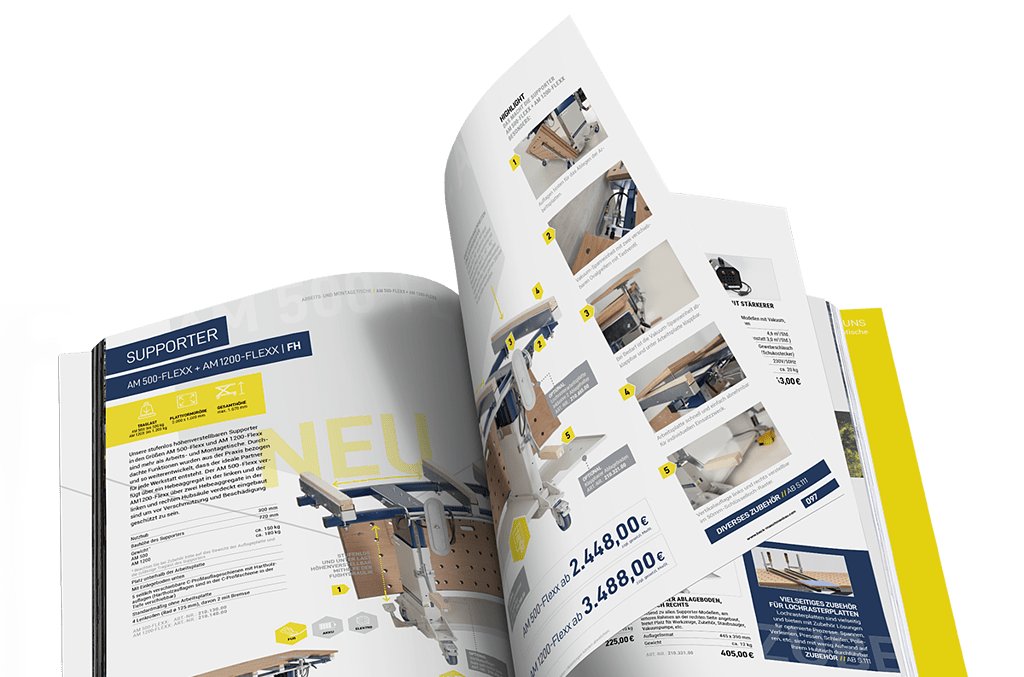
OUR NEW
2026 CATALOG
NEWSLETTER
SUBSCRIBE
BECK PRODUCTS
IN THE ONLINE SHOP
-

Lifting
-

Lowering
-

Conveying
-

Rotating
-

Tilting
-

Swivelling
Lifting
Lowering
Conveying
Rotating
Tilting
Swivelling