Beck Maschinenbau offers professional band saws and under-table miter saws for trade, industry, and training. The machines are designed for regular use in carpentry shops, joinery shops, wood construction companies, training workshops, and industrial manufacturing environments.
Whether it's precise longitudinal and contour cuts, cutting solid wood to length, or machining large plastic and aluminum workpieces: A high-performance saw is the foundation for efficient and safe workflows.
You can choose from the Rapid series of band saws as well as under-table miter saws with various cutting ranges and blade diameters. This allows you to select your new machine based on the material, the desired cut, and your operational workload.
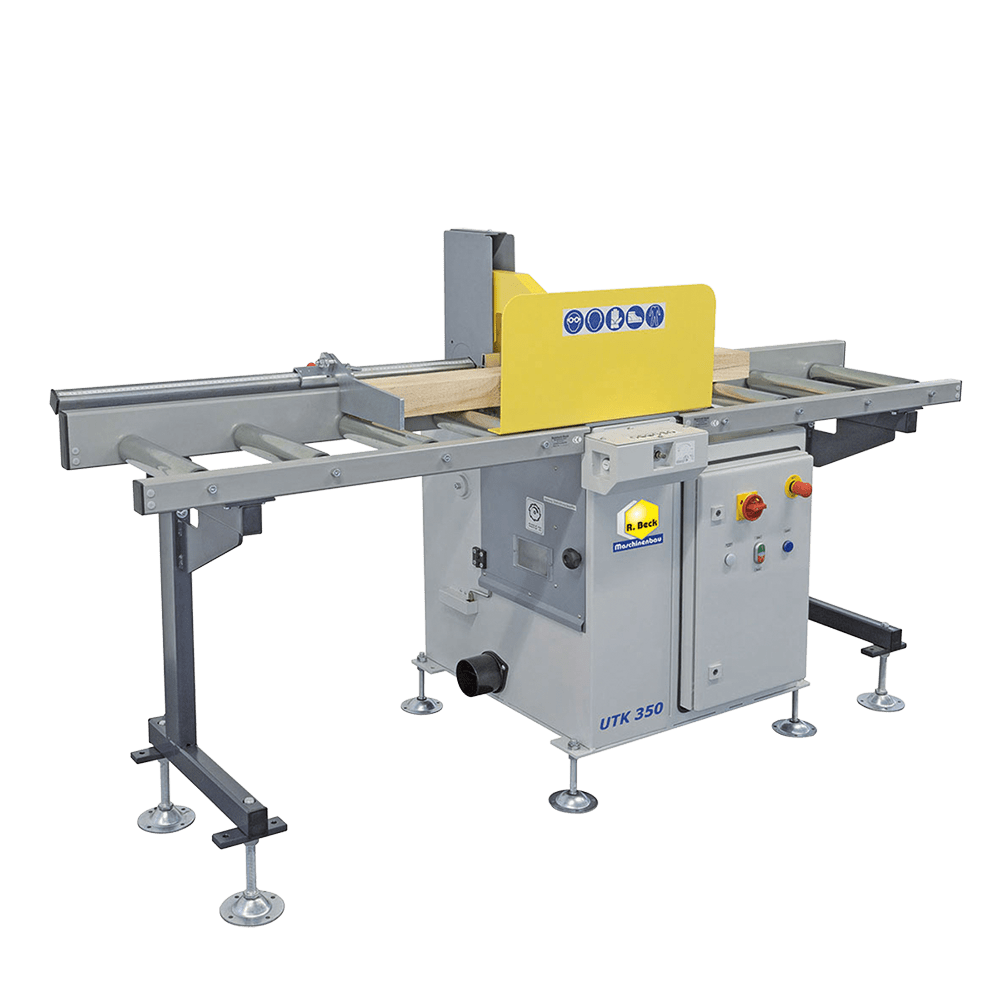
UTK 350
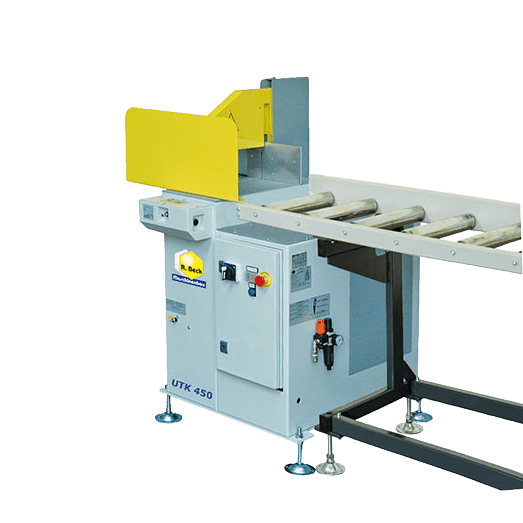
UTK 450
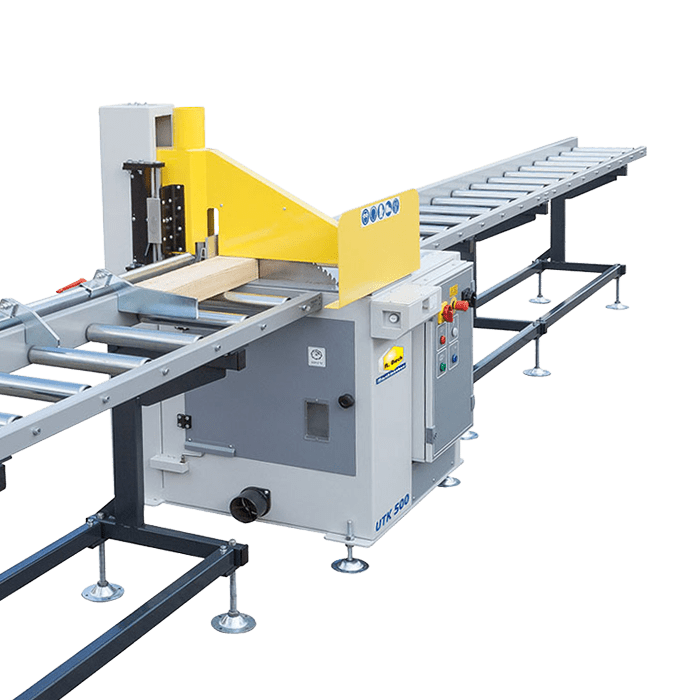
UTK 500
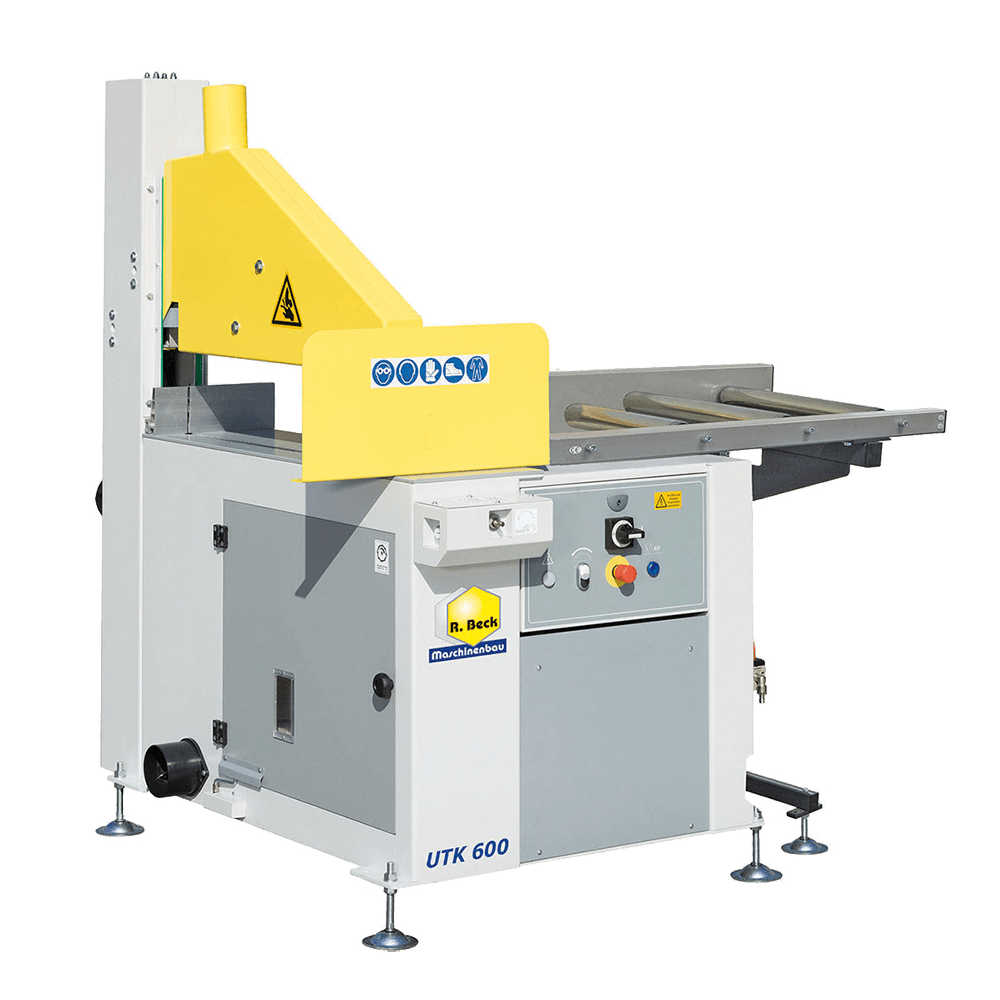
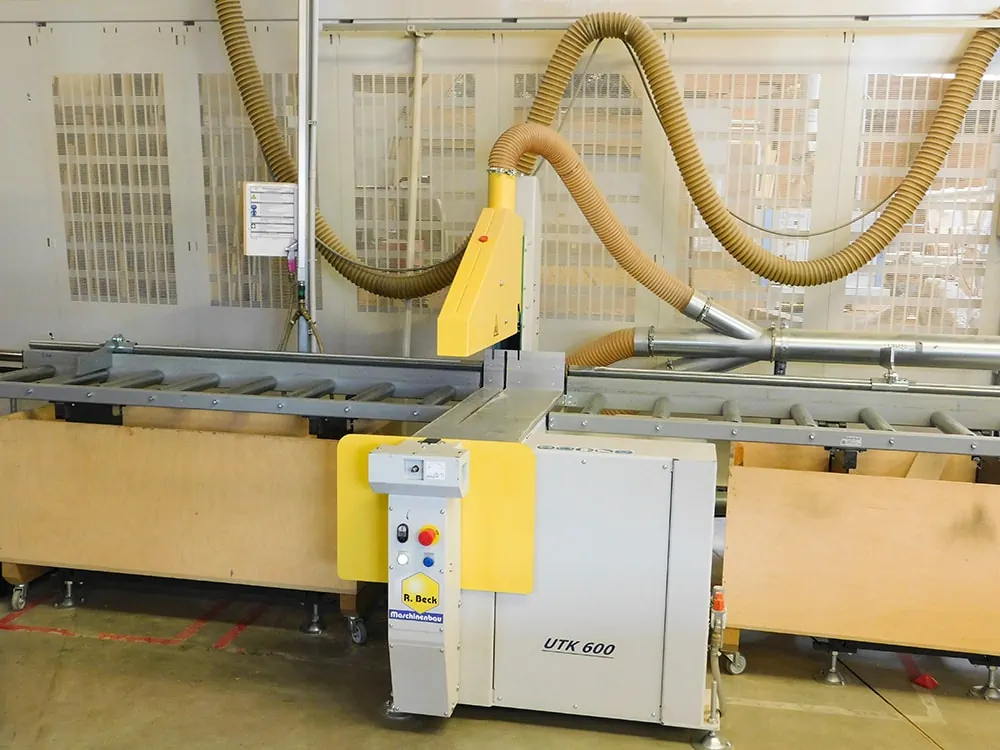
UTK 600
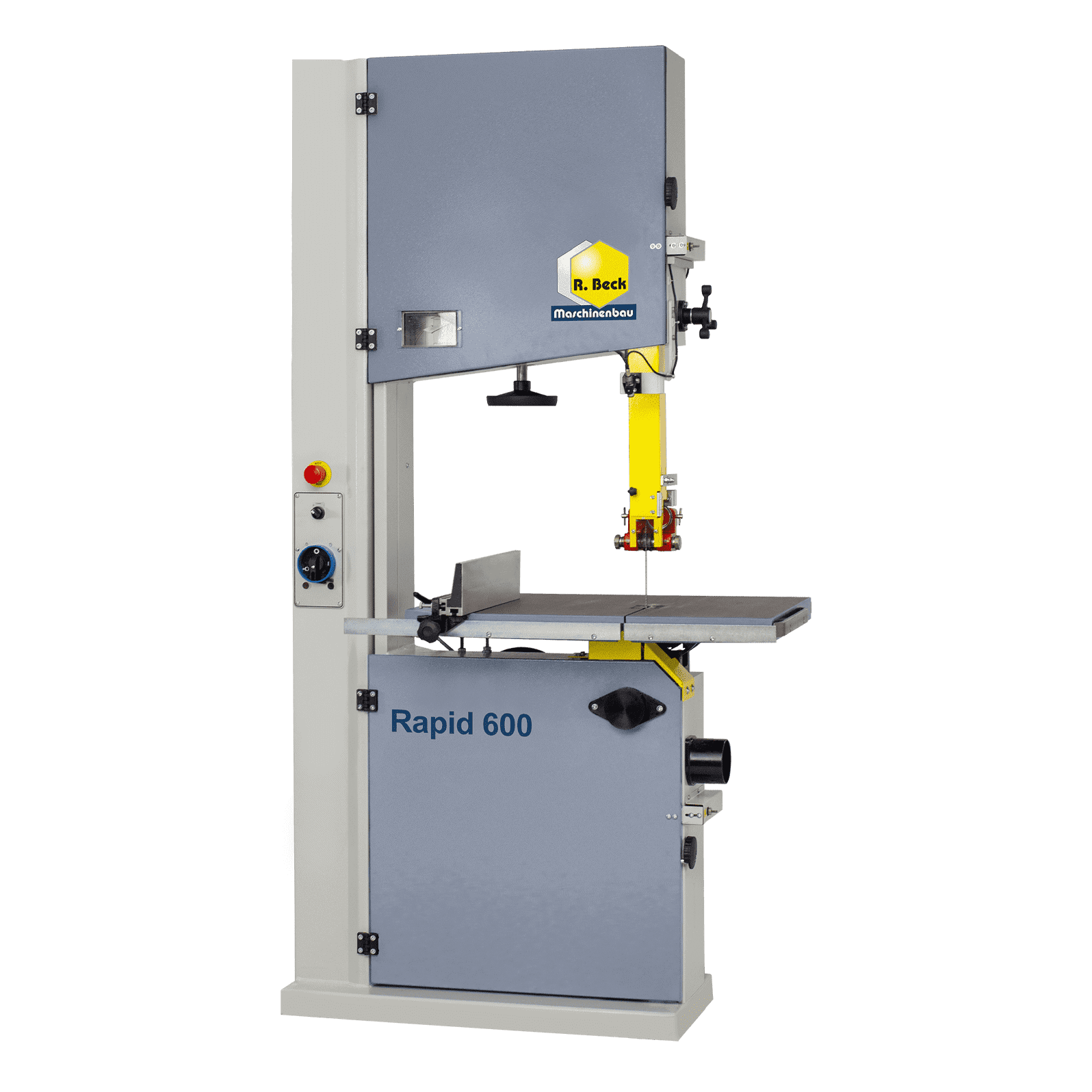
Rapid Bandsaws
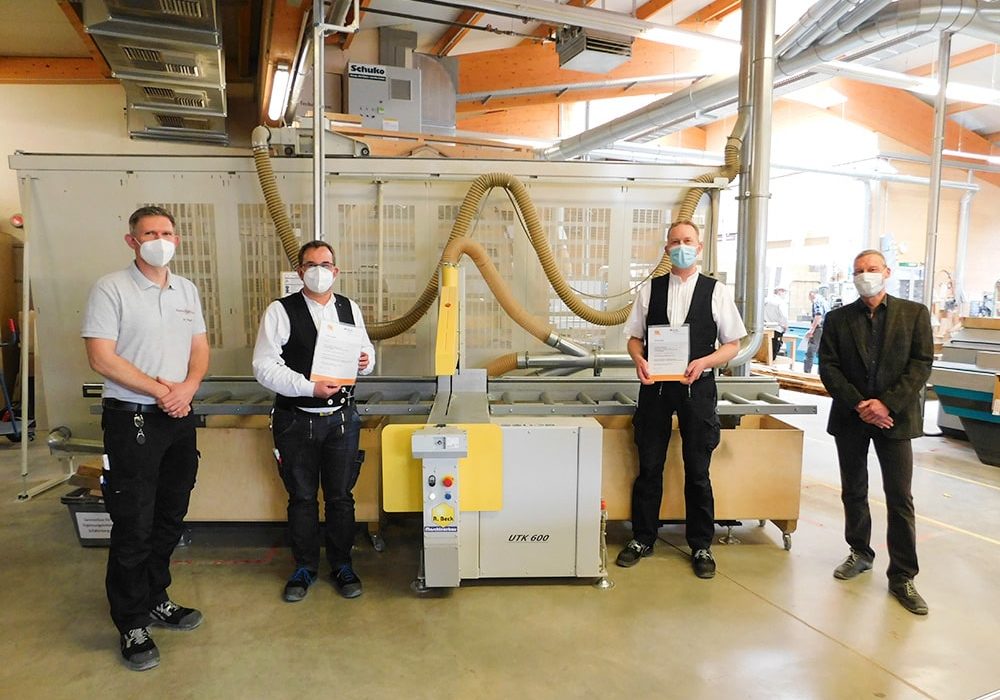
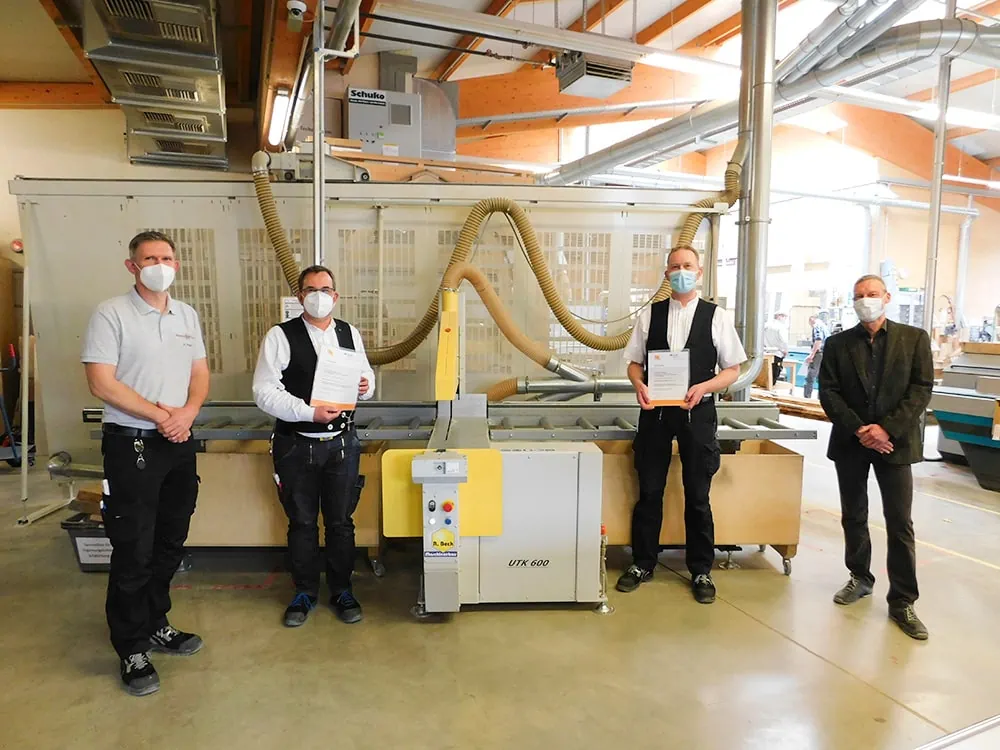
Our customer Kramp & Kramp from Lieme has won the safety award at the BGHM (Berufsgenossenschaft Holz und Metall) with our under-table crosscut saw.
Particularly safe operation thanks to the two-hand control system
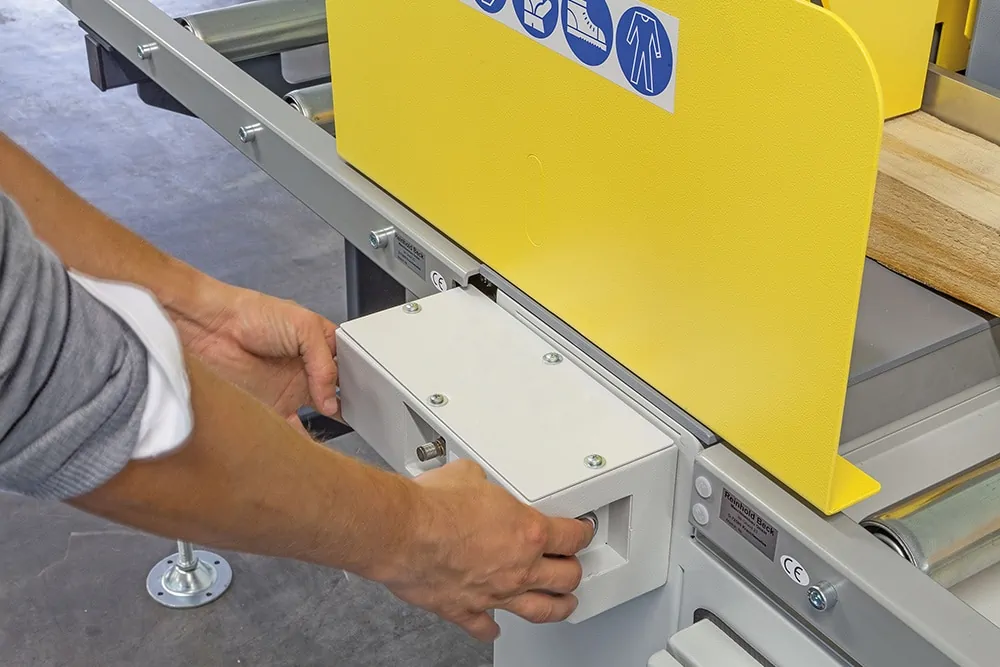
Beck's under-counter miter saws are equipped with a two-hand control system. The cutting process can only be initiated when both controls are activated simultaneously. As a result, the hands remain outside the cutting area during the saw stroke and cannot interfere with the ongoing cutting process. This enhances safety with every cut and promotes a controlled workflow.
Professional Saws for Trades, Industry, and Education
Sawing is often the first processing step in the value chain. It is at this stage that the precision, safety, and cost-effectiveness of the subsequent steps are determined.
Inaccurate cuts lead to additional rework, increased material consumption, and production delays. A professional saw must therefore offer more than just sufficient power. A sturdy construction, secure workpiece guidance, appropriate cutting ranges, and operation that is as simple as possible are also crucial.
The saws from Beck Maschinenbau are designed for professional use. Their sturdy frames, user-friendly controls, and extensive range of accessories allow them to be adapted to a variety of tasks.
Depending on the application, two types of machines may be suitable:
Band saws
A band saw is ideal for a wide variety of sawing tasks. It can be used for straight cuts as well as for contours, curves, and irregular cut paths. This makes it an essential workhorse for many businesses, and it can be used to cut wood, aluminum, and plastics.
Under table crosscut saws
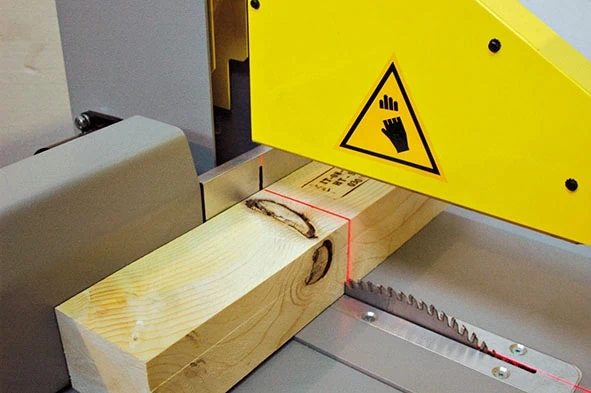
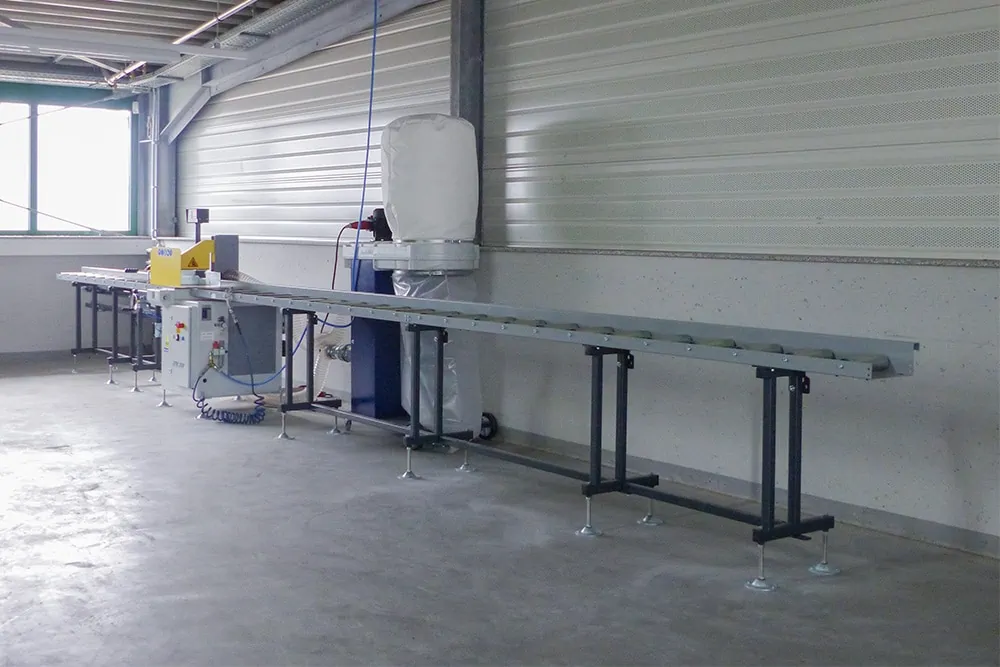
An under-table crosscut saw is used primarily for safely and consistently cutting workpieces to length. During the cutting process, the saw blade moves up through the workpiece from below and then retracts back under the saw table.
This operating principle supports controlled workflows and is particularly well-suited for repetitive cutting tasks in crafts and manufacturing.
Band Saws for Wood: Flexible, Precise, and Versatile
A band saw operates with a closed, continuously circulating saw blade. Due to its relatively narrow kerf and flexible cutting path, it is one of the most versatile stationary sawing machines.
The Rapid series band saws are designed for professional users and are available in various sizes. Depending on the model, blade diameters range from 400 to 900 mm. This allows you to select the machine that best suits the workpiece size, cutting height, and intended application.
For what jobs is a band saw suitable?
A wood band saw can be used for numerous machining tasks, including:
- Straight Longitudinal - and Cross-sections
- Trimming of boards and planks
- Cutting Solid Wood
- Creating Contour and Curved Cuts
- Cutting irregularly shaped workpieces
- Creating Radii and Cutouts
- Working with Sheet Materials
- Preparing workpieces for further machining steps
- Modeling, Furniture, and Interior Design
- Single-Part and Small-Batch Production
By using different band saw blade widths and tooth pitches, a table band saw can be adapted to various materials and cutting tasks.
Wider saw bands help ensure the straightest possible cut. Narrower saw bands allow for tighter radii and are therefore particularly well-suited for contour cuts.
Rapid Band Saws from Beck Maschinenbau
Rapid band saws combine a robust machine design with a wide range of customization options. Depending on the model and configuration selected, they can be used for both standard cutting tasks and specialized machining operations.
For example, the Rapid 600 model shown on the product page offers a maximum cutting height of 400 mm, a maximum cutting width of 580 mm, and a wheel diameter of 600 mm. However, the available machines and equipment options should always be selected to suit the actual application.
Advantages of Rapid Band Saws
- Sturdy construction for professional use
- Different machine sizes for different workpiece dimensions
- Wide range of applications for straight and curved cuts
- A wide range of accessories for specific machining tasks
- Adjusting the cutting pattern to different materials
- Expansion Options for the Table, Stops, and Workpiece Guide
- Highly suitable for skilled trades, vocational training, and manufacturing
Choosing a Professional Band Saw: What Matters Most
A professional band saw should always be selected based on the typical workpieces and workflows in the shop. A larger machine is not automatically the better solution. Rather, it must be adequately sized without taking up an unnecessary amount of space, energy, or investment budget.
1. Maximum cutting height
The cutting height determines how high a workpiece may be at most. Anyone who primarily machines panels, smaller workpieces, needs a different machine class than a business, which regularly cuts beams, solid wood blocks, or tall structural components.
When making your selection, you should consider more than just the cutting height currently required. It makes sense to allow for some leeway to accommodate future jobs and varying workpieces.
2. Cutting width or reach
The maximum cutting width is determined by the distance between the saw blade and the machine stand. It determines the maximum width of workpieces that can be guided on the machine table.
Adequate overhang is especially important when trimming large boards, panel materials, or wide furniture components.
3. Band saw blade width
The width of the saw blade affects the possible cutting path.
A wide saw blade facilitates straight cuts and provides excellent lateral stability. A narrow saw blade is better suited for tight radii and curved contours.
A versatile band saw should therefore be able to accommodate different band saw blade widths.
4. Engine Power
The required motor power depends, among other things, on the type of material, the workpiece dimensions, the feed rate, and the operating time.
For thick solid wood cross-sections and regular continuous operation it is a higher power reserve is advisable. For lighter machining tasks it is possible on the other hand even a more compact model may be sufficient for.
5. Work Table and Table Tilt
A worktable that is sufficiently large and stable helps ensure precise control over the workpiece. A table tilt mechanism can be useful for miter and bevel cuts.
Depending on the model, Rapid band saws offer stepless table adjustment up to 45 degrees.
6. Stops and Workpiece Guidance
A rip fence helps ensure straight longitudinal cuts. Miters make it easier to make consistent angled and cross cuts.
Beck offers various miter stops for its Rapid band saws, as well as a heavy-duty band saw blade guide with hardened back and side rollers.
7. Extraction
Sawing produces chips and fine dust. A suitable dust extraction system improves visibility of the cutting area, reduces buildup inside the machine, and helps keep the workplace clean.
During the planning phase, you should verify whether the existing exhaust system is compatible with the selected band saw in terms of connection diameter and airflow capacity.
8. Stationary or flexible use
Band saws are generally designed as stationary machines. If a machine needs to be moved occasionally within the workshop, a mobile unit may be useful.
--> A transport cart with swivel and fixed casters is available for the Rapid band saws.
Under-table crosscut saws for safe and efficient cutting to length
Under-table crosscut saws are designed for the precise cutting to length of molding, boards, profiles, squared lumber and other elongated workpieces designed.
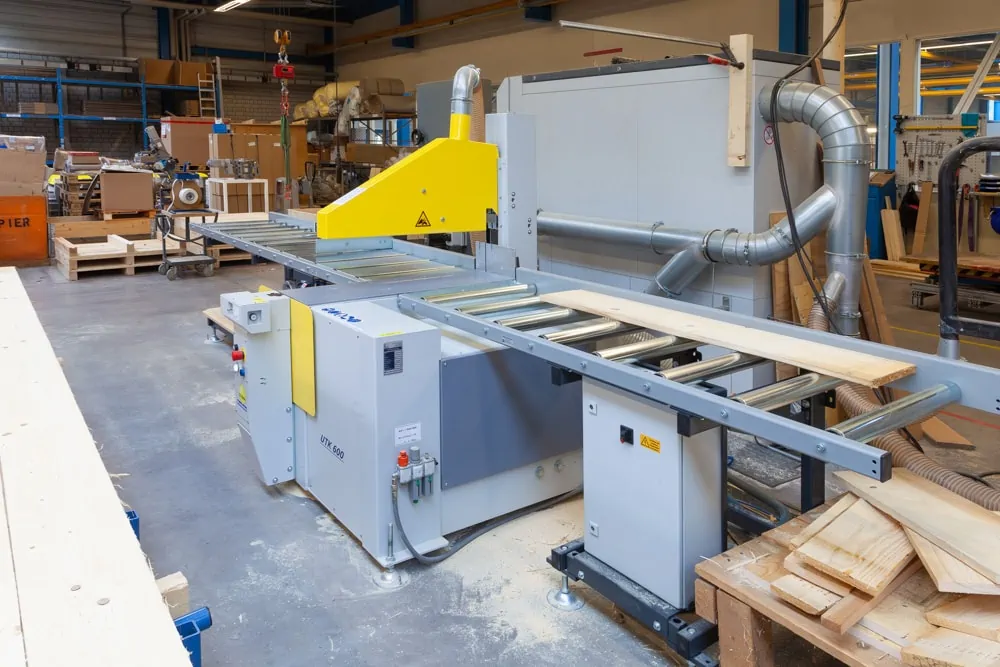
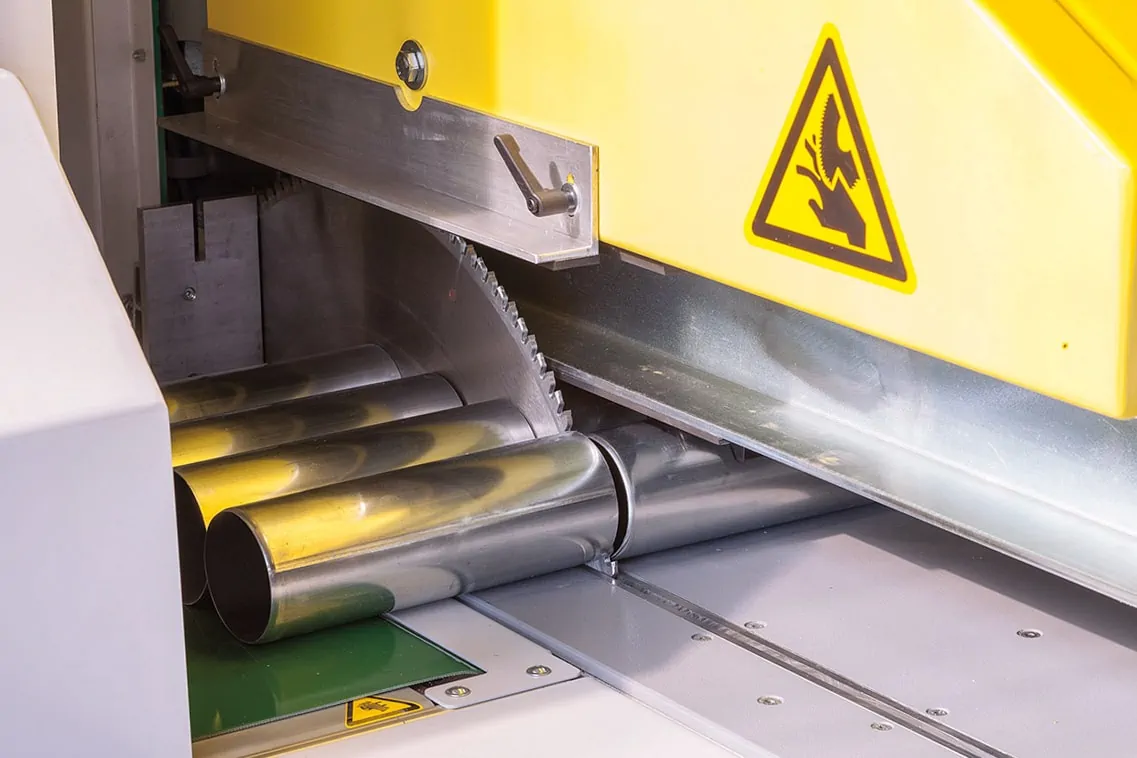
Unlike traditional crosscut saws, the saw blade is positioned below the worktable in its starting position. It moves through the workpiece only after the cut is initiated. After the cutting process is complete, it automatically retracts back under the table.
On the under-table crosscut saws from Beck, the saw stroke is pneumatic. The workpiece is automatically secured during the cut. The cutting trigger is activated via a two-hand safety switch.
Typical Applications for an Under-Counter Mitre Saw
Under-counter miter saws are particularly suitable for:
- Cutting Solid Wood to Length
- Cutting Molding and Profiles to Size
- Working with Lumber and Beams
- Batch cuts with recurring lengths
- Manufacturing of window, door, and furniture components
- Wood-Frame Construction and Wooden House Construction
- Packaging and Pallet Construction
- Cutting in Carpentry Shops and Timber Construction Companies
- industrial prefabrication
- Training and Apprenticeship Workshops
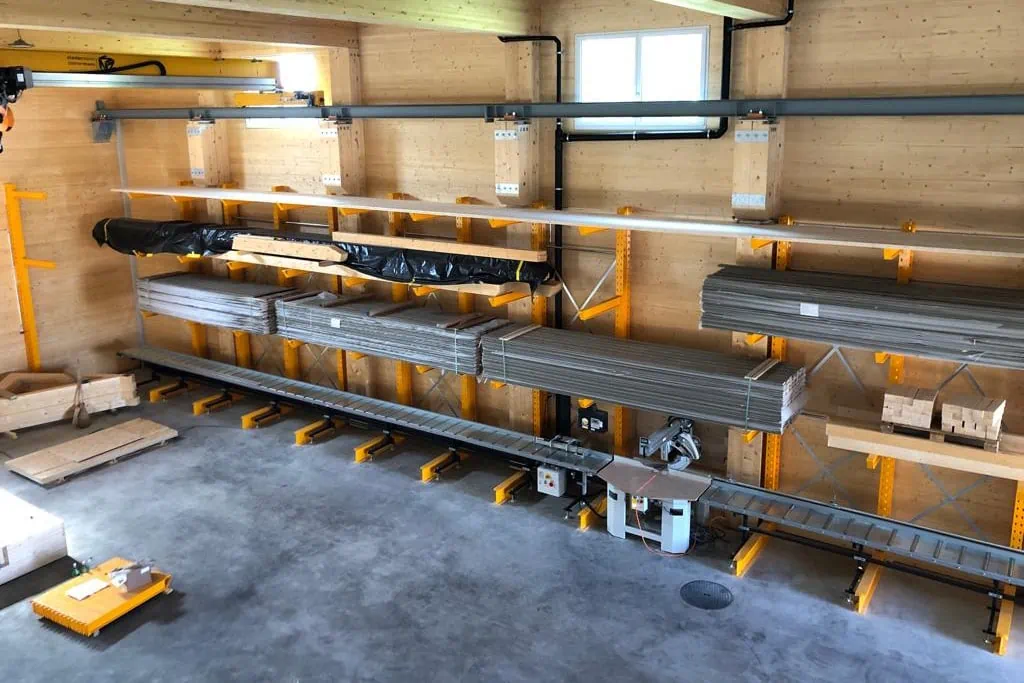
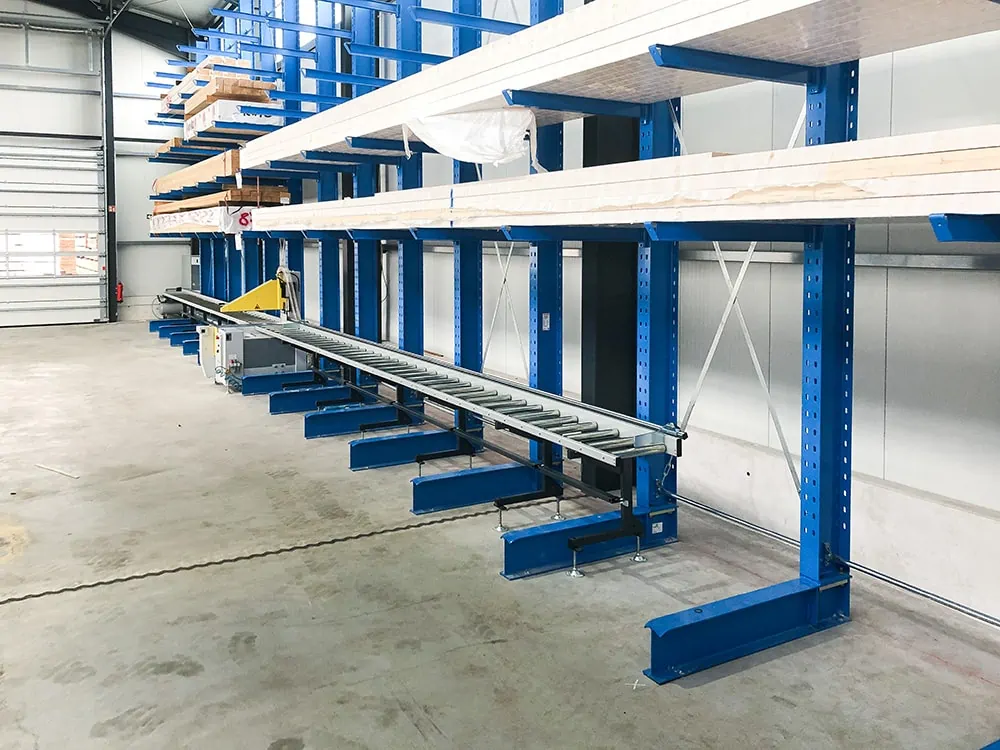
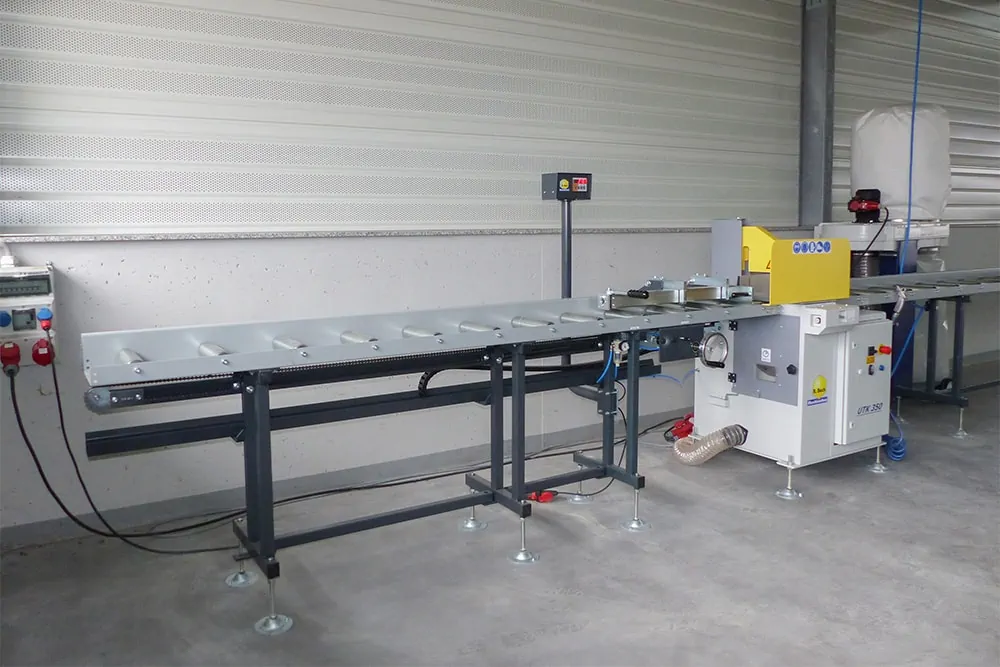
When combined with a roller conveyor or measuring conveyor, the material can be fed in a controlled manner, positioned, and transported further after cutting.
Advantages of an under-counter miter saw
Controlled Sawing Process
The saw blade is located between the cuts, protected beneath the table. The saw stroke does not begin until the cut is intentionally initiated.
Automatic Workpiece Clamping
A clamp holds the workpiece in place during the sawing process. This prevents that, that the material moves uncontrollably during the cut.
Repeatable Cut-to-Length Operations
When used in conjunction with stops, roller tracks, and measuring tracks, recurring lengths can be processed efficiently.
Streamlining Workflows
The saw feed is pneumatic. Unlike with a manual crosscut saw, the operator does not have to pull the saw unit across the workpiece.
Integration into Material Flows
Under-table crosscut saws can be combined with feed and stop roller conveyors. This creates a continuous workstation for material feeding, positioning, cutting, and further transport.
Suitable for continuous operation
The sturdy construction and automated workflow enable safe and fatigue-free cutting of workpieces to length, even for regularly recurring cuts.
Choose the right under-counter miter saw
Beck Maschinenbau offers the UTK 350, UTK 450, UTK 500, and UTK 600 models. The model designation is based on the maximum possible saw blade diameter.
As the saw blade diameter increases, the possible cut dimensions generally increase as well. However, the choice of saw blade and motor power are not the only decisive factors. The workpiece width, workpiece height, cycle rate, available space, and desired level of automation must also be taken into account.
UTK 350
The UTK 350 is the compact under-counter miter saw within the model series. It is suitable for use in businesses that primarily cut small to medium workpiece cross-sections.
The machine has a maximum saw blade diameter of 350 mm, a maximum cutting height of 100 mm, and a maximum cutting width of 230 mm, with a motor power of 3 kW.
UTK 450
The UTK 450 offers a larger cutting area and is suitable for wider workpieces. It is designed for saw blades up to 450 mm and achieves a maximum cutting height of 115 mm and a maximum cutting width of 340 mm with a motor power of 4 kW.
UTK 500
The UTK 500 is designed for larger material cross-sections and more demanding cutting tasks. It can be a good choice for companies that regularly switch between different workpiece sizes and require greater performance reserves.
UTK 600
The UTK 600 is the largest under-table crosscut saw in the series. It is designed for particularly large saw blade diameters and correspondingly large workpiece cross-sections.
This model is particularly well-suited for applications in which beams, large square timbers, or oversized components need to be cut to length reliably and consistently.
The specific suitability of a model depends on material, cross-section, desired cycle capacity and configuration. To ensure a robust machine selection, you should base it on the largest most common workpieces should be used as the basis for the selection.
Band Saw or Under-Table Mitersaw: Which Saw Is the Right One?
Band saws and under-table miter saws serve different purposes. Which machine is suitable therefore depends primarily on the type of cut you want to make.
A band saw is useful when …
- straight and curved cuts are to be made
- Workpieces are trimmed or cut apart
- Contours, radii, or cutouts are required
- machining workpieces of various shapes
- We are looking for a versatile woodworking machine
- where mostly individual parts or varying shapes are manufactured
An under-counter miter saw is useful when …
- elongated workpieces are cut to length
- many right-angled cuts are required
- process recurring cut lengths
- controlled workpiece clamping is desired
- Rollers— and measuring tracks are to be integrated —
- Mass-production cuts must be carried out cost-effectively
--> The two machines complement each other
In many professional workshops, band saws and under-table miter saws are used not as alternatives but as complementary tools.
The band saw handles flexible cutting, slitting, and contour work. The under-table crosscut saw ensures fast and, safe and repeatable crosscuts.
Frequently Asked Questions About Band Saws and Under-Table Mitre Saws
What is a table band saw?
A table band saw is a stationary band saw with a work table. The workpiece rests during the sawing process on this table on and is manually or with the help of stops guided. The term is used both for compact machines and as well for larger professional band saws used. Therefore, the actual performance data and not merely the product name are decisive. a45> not merely the product name.
What sets a professional band saw apart?
A professional band saw is designed for regular commercial use. Key features include a sturdy machine construction, precise band guidance, sufficient motor power, a large worktable, suitable dust extraction connections, and comprehensive safety features.
In addition, it should be compatible with a variety of saw bands and practical accessories.
What band saw blade width do I need?
Wider saw bands are usually used for straight cuts, as they offer greater lateral stability. Narrower saw bands are better suited for tight curves and radii.
The minimum and maximum permissible saw band widths depend on the specific band saw model.
What is an under-counter miter saw used for?
An under-table miter saw is primarily used for cutting elongated workpieces to length. Typical examples include moldings, boards, profiles, square lumber, and beams.
It is particularly well-suited for repetitive right-angle cuts and batch cutting.
How does an under-counter miter saw work?
In the starting position, the saw blade is located below the saw table. Once the cut is initiated, it moves through the secured workpiece. It then returns to its position below the table. On Beck under-table miter saws, the saw stroke is powered pneumatically.
Which under-counter miter saw is the right one?
The selection depends primarily on the maximum height and width of the workpieces. In addition, the cutting capacity, required motor power, saw blade diameter, cycle time, and desired accessories should be taken into account. The UTK 350 may be sufficient for smaller cross-sections. For larger workpieces, the UTK 450, UTK 500, and UTK 600 models are available.
Can a band saw also cut plastics?
Whether plastic can be cut depends on the specific machine model, the band speed, the band guide, and the saw band used. For certain Rapid models, a band saw blade guide with a ball-bearing-mounted back roller is available for cutting plastic. Specific suitability should be confirmed in advance with Beck Maschinenbau.
Does Beck Maschinenbau offer advice on selecting machinery?
Yes. Based on the workpiece dimensions, material, cutting task, and desired workflow, we can work together to determine which band saw or under-table crosscut saw—and which additional equipment—is suitable.

Your contact person:
Klaus Blocherer
Distribution & Logistics
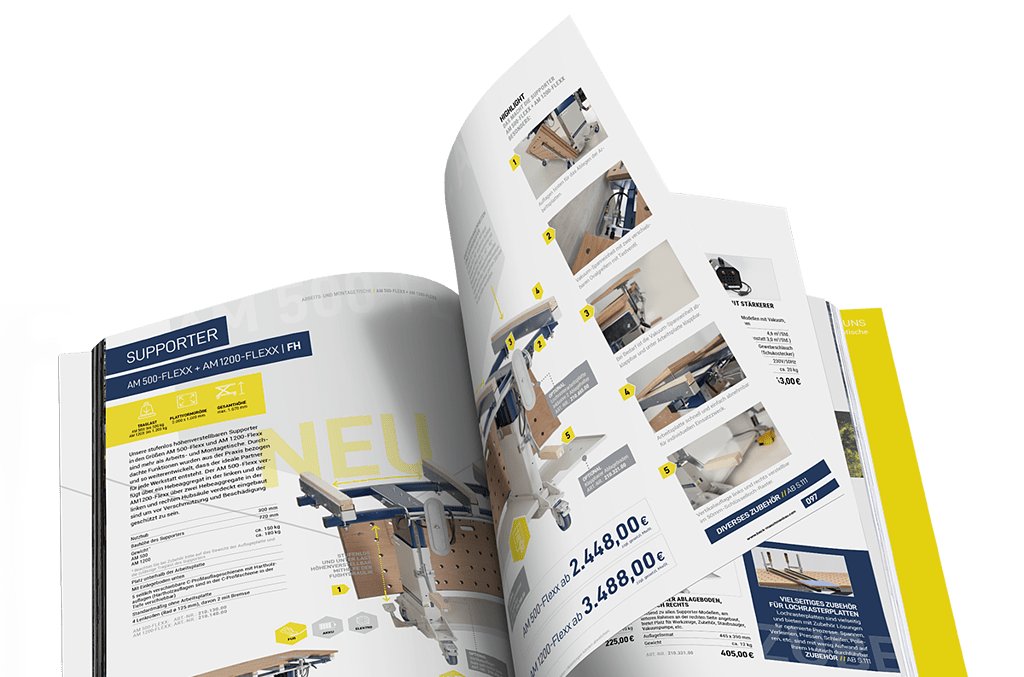
OUR NEW
2026 CATALOG
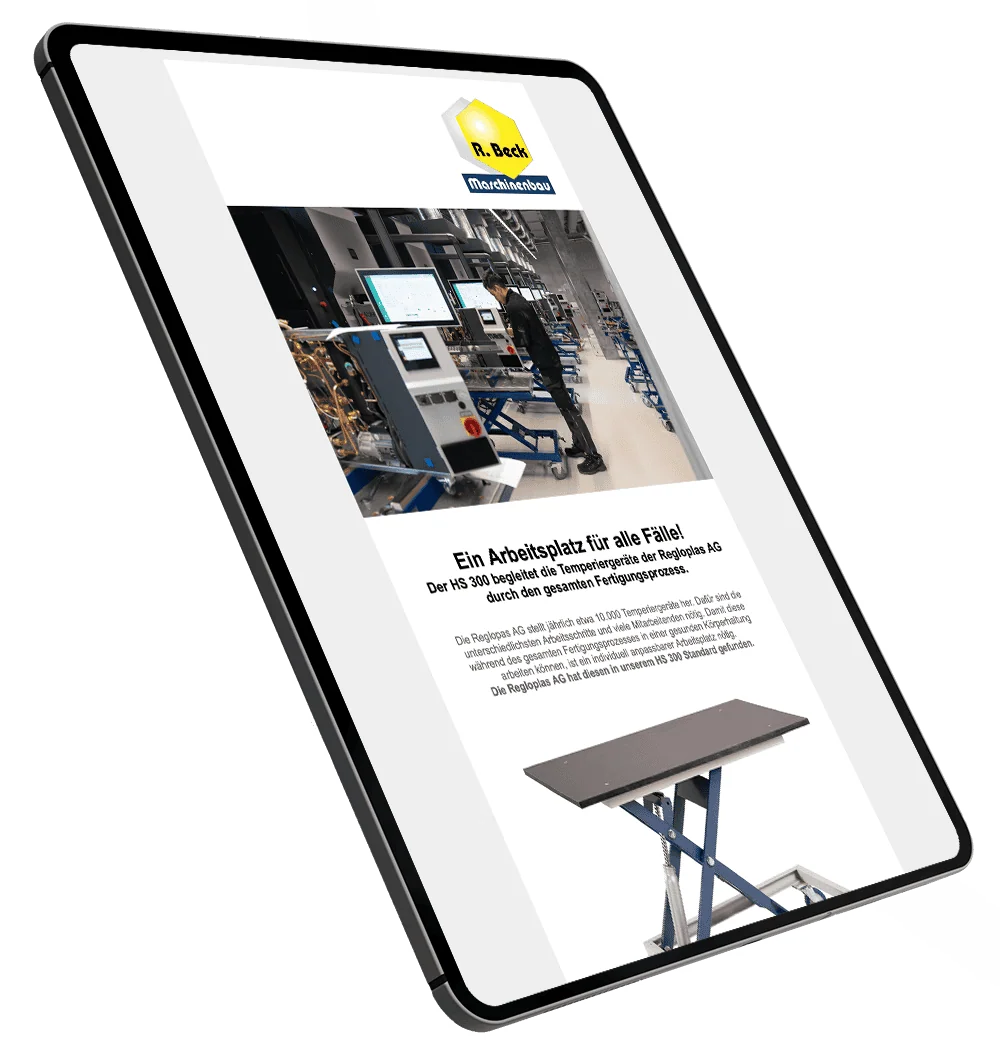
NEWSLETTER
SUBSCRIBE
BECK PRODUCTS
IN THE ONLINE SHOP
-
Lifting
-
Lowering
-
Conveying
-

Rotating
-
Tilting
-
Swivelling
Lifting
Lowering
Conveying
Rotating
Tilting
Swivelling