



EU PATENT
Height-adjustable work and assembly table
The versatile ErgoPlan – the classic workbench combined with the height-adjustable work table creates an ergonomically optimized workplace and opens up new possibilities in woodworking. The height-adjustable ErgoPlan workbench from Beck Maschinenbau combines functionality and comfort to meet the highest demands. Developed for use in educational institutions, training centers, vocational schools, and in the workshops of carpenters and joiners, it impresses with its unique ability to be adjusted in height with millimeter precision, even under load.
At the heart of the modern workbench is a mechanism that is easily operated by a foot pedal. This allows for simple and precise adjustment of the working height, providing an ergonomic solution and an optimal working position, reducing physical strain and promoting efficiency and accuracy in daily work. The ErgoPlan – an indispensable tool for modern workshops and training environments where quality and ergonomics are paramount.
Those who are forced to work in unhealthy postures during their training risk suffering from back problems or other damage to the musculoskeletal system in later years, as well as losing motivation for their job.
-
Different student sizes (height)
-
Conveying awareness of ergonomics and acting as a role model
-
Maintenance-free functionality results in permanent cost savings
-
Durability thanks to high-quality construction, robust design, innovative planning, and service on demand
-
Future-oriented equipment for a valued reputation
-
Mobile use thanks to the chassis with rollers and lifting / lowering device, as well as stationary on stable adjustable feet
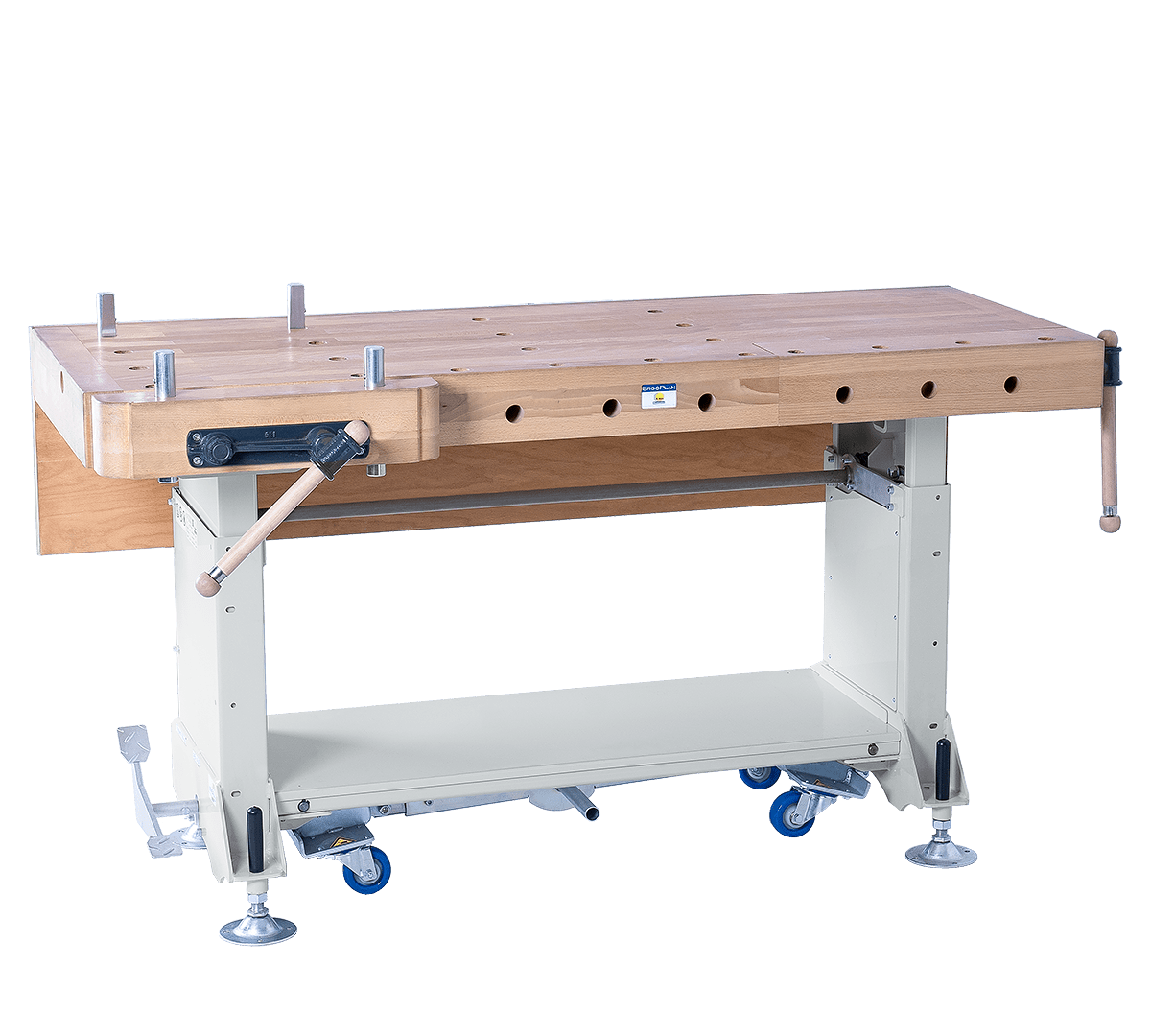
ErgoPlan EP1
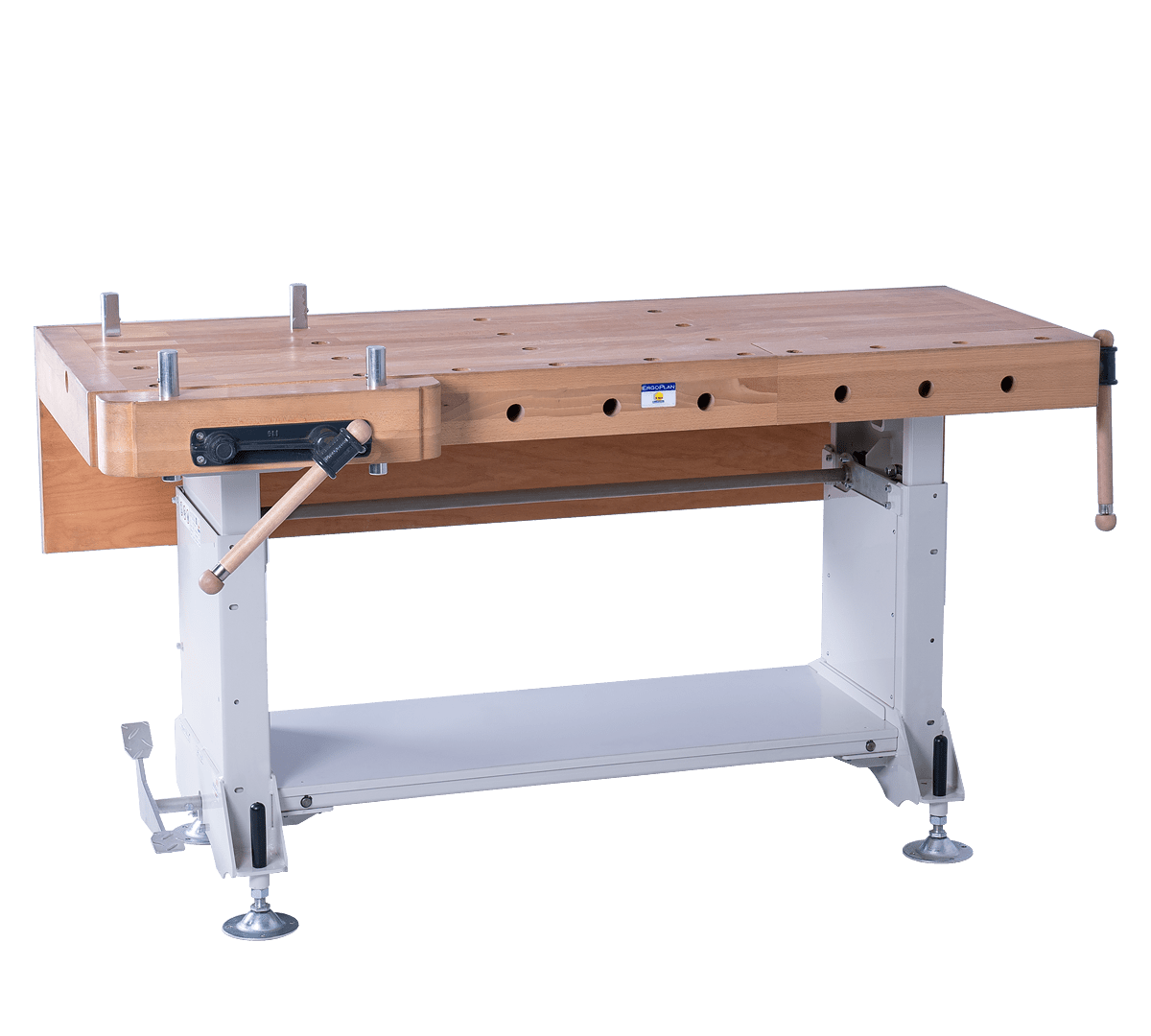
ErgoPlan EP2
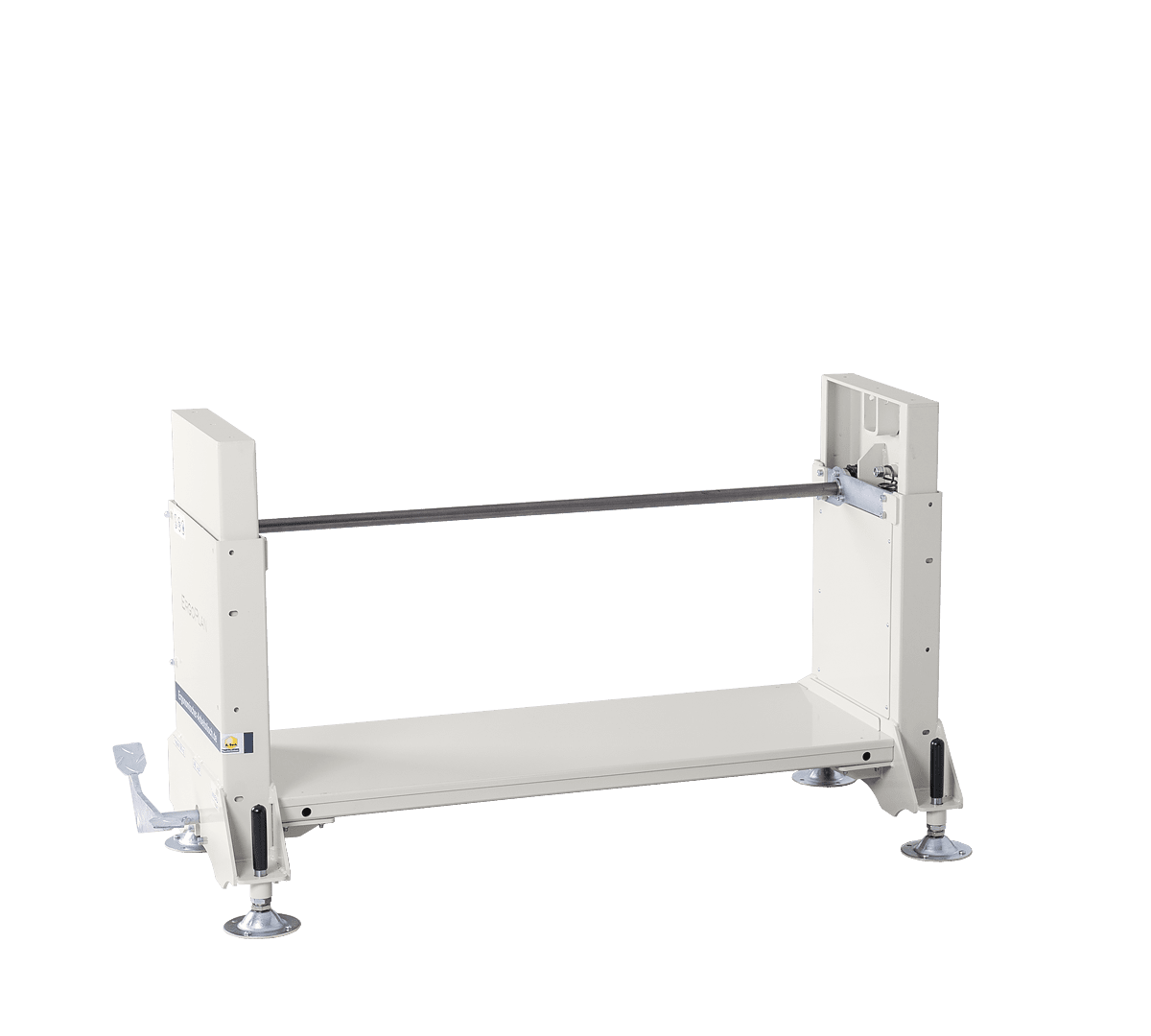
ErgoPlan EP3

Synchroner SRB 1

Synchroner SRB 1+

Synchroner SRB 2

Synchroner SRB 2+
Synchroner SRB 3

Synchroner SRB 3+
Buying a workbench – what should you look out for?
When buying a workbench, you should consider a few key criteria in order to find the model that best suits your needs. First of all, it is important to consider who the workbench is for and what it will be used for. Will it be used in a carpentry workshop or training workshop with intensive daily use? If so, we recommend professional workbenches that are highly robust and fully equipped (two collets, strong top, etc.). For occasional DIY projects, however, a simpler model may suffice—but even here, quality pays off, as the workbench is the foundation of precise handiwork.
When buying a workbench, the following factors play a role:
- Material and construction: A workbench should be made entirely of high-quality hardwood (often beech) and have a sturdy frame. This ensures that the high shear forces that occur during woodworking are safely absorbed. Make sure you choose a thick worktop (usually>50 mm) and solid joints – this guarantees durability and stability.
- Clamping devices: Good workbenches have at least one front clamp (on the left front) and one rear clamp (right side) as built-in vices. These enable workpieces of various shapes to be clamped securely. Check the quality of the clamping jaws—modern models usually have steel or cast iron elements in the clamping mechanism for precise, parallel pressure.
- Dimensions and weight: The size of the workbench should be appropriate for the available space and the workpieces. For professional requirements, a larger model is recommended—lengths of 1.5 to 2 meters are not uncommon, allowing even long workpieces to be processed. A heavy workbench (100–200 kg) is advantageous as it does not slip while working. Models for professional use often weigh over 200 kg.
- Height adjustability: A height-adjustable workbench table is a huge plus in terms of ergonomics. Especially when several people of different heights are working on it (e.g., in schools), it should be possible to adjust the working height flexibly. Beck's ErgoPlan workbench, for example, offers stepless height adjustment under load using foot hydraulics—so even heavy workpieces or vise clamps cannot prevent adjustment.
- New vs. used: Consider whether you want a new workbench or whether a used one would be suitable. High-quality new workbenches offer state-of-the-art features (e.g., height adjustment, modular extensions) and come without signs of wear, whereas used benches can be cheaper. However, keep in mind that older models often lack the ergonomic improvements of modern designs and may need to be restored. For long-term, professional use, it is usually worth investing in a new workbench with a warranty and manufacturer support.
By considering all these aspects in your purchasing decision, you can ensure that your new workbench will meet both your current and future requirements. In the next step, we will take a closer look at some of these points, such as wood type, dimensions, height adjustment, and more.
Buying a new workbench – advantages of modern models
In a professional environment, the question often arises: should you buy a new or used workbench? Purchasing a new workbench has several advantages, which are particularly important when it comes to intensive use. New models are ready for immediate use and show no signs of wear and tear—you get a “fresh start,” so to speak. In addition, buyers of new workbenches benefit from the technical advances made in recent years.
Modern workbenches (such as the ErgoPlan series from Beck) have features that old workbenches do not have. First and foremost among these is the aforementioned height adjustability, which is completely absent from historical workbenches. Furthermore, new professional models are often equipped with well-thought-out details, such as: protective covers on mechanical parts to minimize the risk of accidents, ergonomically shaped cranks or levers on the clamps, and prepared mounting points for accessories (e.g., drawer modules or tool holders). There have also been developments in terms of materials—Beck's workbench, for example, combines traditional wooden elements with precision-manufactured metal parts (cast steel front clamp, aluminum box guide at the rear) for maximum stability.
Another advantage of buying new is the warranty and service support provided by the manufacturer. With high-quality manufacturers such as Beck Maschinenbau, you can rest assured that spare parts and maintenance will be readily available when needed (keyword: service on demand). In addition, new workbenches are generally designed to be low-maintenance—in the case of the ErgoPlan, for example, this means a hydraulic lifting column that is protected and integrated into the table and requires no special maintenance. All of this leads to long-term cost savings because breakdowns or repairs are less likely.
Don't forget: a new, modern workbench can also enhance the image of your workshop or educational institution. Schools and companies that invest in top-quality ergonomic equipment demonstrate their progressiveness and appreciation for the health of their employees or trainees. Overall, the decision to purchase a new workbench is particularly advisable if you place the highest value on quality, safety, and sustainability—despite higher acquisition costs, this pays off in terms of efficiency and durability.
Professional workbench – quality for craftsmanship and training
A professional workbench differs significantly from simple workbenches or inexpensive hobby models. In craft workshops, training facilities, and anywhere else where demanding woodworking is carried out on a daily basis, the workbench must be particularly robust, durable, and functional.
Professional workbenches are characterized by their elaborate construction: the entire structure is usually made of solid wood (typically beech) – both the top and the base frame. This provides the necessary stability to absorb even the greatest thrust and leverage forces during planing, chiseling, etc., without the table giving way. The worktop is extra thick (often 50–60 mm or more) and generously sized so that even large workpieces can be placed on it and worked on. In addition, professional workbenches almost always have two clamps – a front clamp on the left and a rear clamp on the right – which allows flexible clamping in different positions. Cheaper or smaller benches sometimes only have a front clamp; in the professional sector, however, the rear clamp is standard, for example, to clamp long boards flat on the top (as opposed to a bench hook as a counterpart).
Weight is also a sign of quality: a professional workbench is pretty heavy—often well over 220 pounds—which makes it really stable. The Beck ErgoPlan EP2, for example, weighs around 210 kg including the base frame. This weight ensures that the bench does not slip even during heavy planing or chiseling and that vibrations are dampened.
Furthermore, many professional models feature useful additions: for example, a rear storage compartment for tools and small parts, or integrated cabinets/drawers in the base frame for storage. Details like these increase functionality and tidiness in the workplace. Some manufacturers—such as traditional brands like Ulmia or more modern ones like Beck—offer optional accessories such as additional bench hooks, clamping devices, or under-bench cabinets to adapt the workbench to specific needs.
In short, when it comes to workbenches, professional means maximum stability and features. This ensures precise, efficient, and safe working for many years to come. Investing in a professional workbench provides the foundation for the highest quality craftsmanship—a difference that is noticeable in everyday work and in the results.
Height-adjustable workbench – ergonomics in the workplace
One of the most revolutionary developments in modern workshop equipment is the height-adjustable workbench. This refers to workbenches whose working height can be flexibly adjusted—ideally continuously and without effort. Why is this so important? Because the optimal working height depends on body size and the task at hand. A fixed standard height (often around 85 cm) is always a compromise. Working ergonomically, on the other hand, means adjusting the workbench height so that your back, neck, and arms remain in a relaxed position and sufficient force can be transferred.
The advantage is particularly evident in schools and training workshops, where people of different heights take turns working at the same bench: the workbench can be adjusted to suit each student or trainee. This teaches young craftsmen to pay attention to health and ergonomics right from the start – and the equipment itself serves as a model for occupational safety. Of course, experienced carpenters and joiners also benefit: anyone who spends many hours a day at the workbench will appreciate the option of varying the height from time to time (e.g., setting it a little higher for delicate work, a little lower for powerful planing operations).
The ErgoPlan workbench from Beck Maschinenbau is a prime example in this category. Its design allows for continuous height adjustment under load using foot hydraulics. A centrally mounted foot lever pumps the worktop to the desired height – without any electricity. Even heavy workpieces or one-sided loads (e.g., when a workpiece is clamped in the front vise) are no obstacle, as the hydraulic system is designed to compensate for asymmetrical loads. Once the desired height is reached, the position is securely fixed. For the user, this means no more back pain – you always work at the ideal height for you. The bench height can be optimized for changing work processes (planing, assembly, detailed work).
In addition to pure height adjustment, these modern workbenches often score points with other well-thought-out features. One example is mobility: Beck's height-adjustable workbench has a fold-out chassis with casters and a lifting and lowering mechanism, making it easy to move around the room despite its weight. For working, it is then lowered back onto stable feet – fixed but mobile, as the saying goes. Safety features are also integrated, such as a vertical protective screen at the rear that prevents crushing points when two tables are height-adjusted next to each other.
All in all, a height-adjustable workbench offers the following advantages (especially in training and craftsmanship):
- Optimal working height for every user: Different body sizes can be compensated for, which minimizes physical strain and promotes precision.
- Promoting awareness of ergonomics: In schools and businesses that use these benches, users learn the importance of ergonomics right from the start—the furniture becomes a teacher and role model.
- Maintenance-free technology: The height adjustment is designed so that it does not require any complex maintenance. High-quality hydraulic or spindle systems function reliably for years, saving costs in the long term.
- Durability and stability: Despite the adjustment mechanism, these workbenches remain extremely robust. High-quality construction and innovative design ensure that the bench can withstand all stresses and strains.
- Modern image: Future-oriented, ergonomic workshop equipment enhances the reputation of an educational institution or carpentry workshop, demonstrating that health and progress are high priorities.
- Flexible location: Thanks to integrated casters or wheels, the workbench can be moved around the room as needed without compromising stability. This makes it easier to rearrange the workshop or clean the work area, for example.
This multitude of advantages makes it clear why height-adjustable workbenches are becoming increasingly popular. Although they are more expensive to purchase than fixed models, their ergonomic and practical advantages make them an investment in the future, especially for demanding workshops and training workshops.
Material for a workbench – which wood is ideal?
The choice of material—especially the wood used for the workbench—is a decisive factor in the quality of a workbench. Traditionally, workbenches are made almost exclusively from hardwood. The most common type of wood used is red beech (often called steamed beech). Beech has proven itself for several reasons: it is very hard and pressure-resistant, yet sufficiently elastic to cushion blows, and has a fine grain structure that hardly splinters. In addition, beech is comparatively inexpensive in Central Europe, which is a welcome bonus. A workbench top made of solid beech wood – often waxed or oiled – can withstand decades of daily use.
Other hardwoods are sometimes used as alternatives. Canadian maple, for example, is very high quality (but also more expensive). Maple wood is even more abrasion-resistant than beech and visually lighter in color, which some people prefer—however, it costs about twice as much, which is why maple is usually only found in premium benches or custom-made products. Oak was occasionally used for workbenches in the past (particularly in Scandinavia), but is now considered less than ideal because oak wood has coarse pores, warps more easily, and tends to splinter. Ash could be another possible type of wood; it is hard and tough, but is rarely used in standard workbenches due to its distinctive grain and availability.
It is particularly important that the entire structure—especially the worktop—is made of hardwood. Softwoods (such as spruce or pine) would be unsuitable for the worktop, as they are too prone to pressure marks and do not provide the necessary mass. At most, the base frame of simpler benches is sometimes made of softwood, but even here, beech is the standard for professional benches. The use of hardwood ensures that vices and bench hooks have a firm hold and do not wear out. Speaking of bench hooks: modern workbenches have round bench hook holes (usually 19 mm or 20 mm in diameter) in which wooden or metal bench hooks can be inserted. Even the hooks are often made of hardened aluminum or steel, but the surrounding plate is still wood because it protects the surface of the workpieces and provides a soft, non-slip support.
In short:
Beech is the preferred wood for workbenches due to its hardness, fine grain, and availability. Maple is a fine alternative, while oak and other woods are rare and tend to be used for historical reasons. When purchasing a workbench, make sure that it is made entirely of solid wood (no veneered surfaces or similar). A well-maintained beech workbench top – occasionally oiled and kept free of paint stains – will remain the centerpiece of your workshop for generations.
Workbench dimensions – the correct measurements and heights
The dimensions of a workbench should be adapted to the available space and the intended use. Two dimensions are particularly important here: the size of the worktop (length × width) and the working height. Both have a significant influence on the working possibilities and comfort.
Length and width: Standard workbenches for professional use typically range in length from 1.5 m to 2.0 m. More compact models start at around 1.2 m, while very large versions can be over 2.5 m long. For most applications in workshops or training, around 1.8 m (i.e., 180 cm) is a proven size – as is the case with the Beck ErgoPlan EP2 with a table length of 1785 mm. This length allows both longer boards and several small workpieces to be clamped at the same time. The width of the workbench top is often between 50 cm and 80 cm; values around 60–65 cm are common. It is important that the top is wide enough to work on stably, but not so wide that it is difficult to reach the rear edge. Many workbenches have a built-in storage compartment (side table) at the rear, which means that the effective working width is slightly less than the overall dimensions. For example, the ErgoPlan workbench top measures 1700 × 640 mm without clamps – a depth of 64 cm is sufficient to temporarily store even larger workpieces or tools.
Working height: The optimal height of the workbench depends on the user's height. A common rule of thumb is that when your arms are hanging down at your sides, your knuckles should be roughly level with the workbench top. With an average human height of approximately 1.75 m, this results in a standard height of around 85 cm. Many classic workbenches are therefore between 83 and 87 cm high. However, this value can vary significantly for individual people – taller people work more comfortably on higher benches, shorter people on lower ones. This is where the advantage of height-adjustable systems comes into play again: the Beck ErgoPlan, for example, covers a height range from 78 cm to 108 cm. This is an enormous range that meets practically all requirements, from sitting (at a height of 78 cm, you could even work while sitting) to working while standing for very tall people. If you do not have an adjustable workbench, it is worth adjusting the height to your own needs by placing wooden blocks or similar improvisations underneath it – although this remains a makeshift solution, of course.
Tabletop thickness and base: In addition to length, width, and height, you should also consider the thickness of the worktop. As mentioned above, a minimum thickness of ~50 mm is recommended; high-quality benches often have tabletops that are 80–120 mm thick (with a laminated structure, e.g., two layers glued together). The Beck ErgoPlan tabletop, for example, 120 mm thick and consists of two layers (a solid top plate on a carrier plate), which provides enormous stability. The base frame also contributes to the overall height—some benches have adjustable feet that allow for minor level adjustments. If the workbench is to be placed in a workshop with uneven flooring, such adjustable feet are very helpful.
In summary:
Choose workbench dimensions that fit comfortably in your workshop and provide sufficient surface area for your projects. Don't overestimate the length you need—an overly long bench takes up a lot of space and rarely offers any real added value unless you regularly work on extra-long pieces. It is more important to choose a height that suits the user – if in doubt, it is better to work with a bench that is slightly too low and use a platform than one that is permanently too high (which puts strain on the shoulders). The best solution, of course, is an adjustable height, as offered by modern workbenches.
FAQ – Frequently asked questions about workbenches
What are the holes in the workbench for?
The holes in the workbench are used to insert bench hooks or other clamping aids with which workpieces can be clamped in place. In combination with the rear clamp, boards can be fixed flat on the top – one bench hook sits in the hole in the top, a second in the clamp, so that the workpiece is clamped between them. Modern workbenches usually have round holes (ø 19 mm, 20 mm, or 30 mm) in which bench hooks, hold-down clamps, and other clamping devices can be used. The holes thus significantly increase flexibility when clamping and machining workpieces.
Which wood for a workbench?
Workbenches are usually made of hardwood, most commonly beech (European beech). Beech is very hard, relatively inexpensive, and does not splinter easily—ideal for a work surface that gets heavy use. Maple is another option; it is even harder but more expensive. Oak is usually not recommended because it has large pores and is more prone to splintering. Overall, beech has established itself as the optimal wood for workbenches because it combines durability, strength, and good value for money.
What are the parts of a workbench called?
The main components of a workbench are: the worktop (also known as the bench top), the sturdy base frame (usually with four legs and struts) and the clamps. The front clamp (a vice across the top) is located at the front left, and the rear clamp (a second vice, lengthwise along the top) is often located on the right-hand side. Holes for bench hooks are incorporated into the top and the rear vise, which are used to clamp workpieces in place. Many workbenches have a back shelf—a recessed storage compartment across the entire width—and occasionally a cabinet or drawers in the frame. Smaller accessories include the bench wrench (usually a wooden turnbuckle for tightening the clamps) or a bench dog (a separate, height-adjustable support arm for very long workpieces). In short, workbenches consist of the base table (top + frame) and the integrated clamping and storage elements.
How big should a workbench be?
The size of a workbench depends on the available space and its intended use. In a training workshop or professional workshop, lengths of 1.5 to 2 meters are common, as they offer sufficient work surface. For DIY enthusiasts or smaller rooms, a more compact workbench with a length of ~1.2 m may be sufficient. It is important that the depth (width) of the top is at least ~50–60 cm so that you can work comfortably on it. The height should match your body size: the standard height is approx. 85 cm, but the ideal height is one that is individually tailored to you or a height-adjustable model that can cover a range of approx. 75 cm to 105 cm. If you have a lot of space and are planning large projects, you should choose a larger workbench; if space is limited, a medium-sized model will do – the main thing is that it is stable and heavy enough.
What type of thread is used for a workbench?
Special trapezoidal threads or similar flat threads are used for the screw mechanisms of the workbench collets. This thread form (similar to the Acme thread) has wide flanks and a high core strength, making it very resilient and easy to turn even under pressure. Older workbenches had wood screws with coarse wood threads, while modern models use steel spindles with a trapezoidal profile, often around 20–30 mm in diameter. The trapezoidal thread offers the advantage of being durable and distributing the forces evenly – ideal for the high clamping forces in a workbench vise. Incidentally, the handwheel or handle used to tighten the clamp is called a bench key in German, even though today it is usually a metal lever or wheel.
How do you properly maintain a workbench?
A workbench requires little maintenance, but a few measures will ensure that it remains in top condition for years to come. Wooden surfaces of the bench—especially the worktop—should be regularly cleaned of dust and glue residue and oiled from time to time. A linseed oil or hard oil finish protects the wood and prevents dirt or glue from becoming ingrained. When working, never saw or chisel directly into the top; instead, place a sacrificial board underneath. This will prevent nicks in the table. If possible, avoid doing metalwork on the workbench, as metal shavings can damage the wood and cause rust spots. Tighten the screws on the frame at regular intervals and apply a drop of oil to the threaded spindles of the clamps from time to time to keep them running smoothly. If you follow these simple tips, your workbench will remain a reliable companion for many decades—a well-maintained workbench can actually remain fully functional for a hundred years or more.
Use in the banking sector
Learn more about the direct application of Beck's ErgoPlan workbench here. Two vocational school teachers share their experiences and report on the application, their first impressions, and working with students on the height-adjustable workbench.
Use in the bank room with the height-adjustable ErgoPlan workbench.

Height adjustment via foot hydraulics:
A centrally located foot lever allows quick raising and lowering of the workbench table—without a power supply.

Safe and practical
The protective plate mounted vertically on the table prevents jamming when two tables are placed next to each other during height adjustment. In addition, the workbench table is resistant to impacts and vibrations.

Fixed but mobile
A chassis with casters and a lifting/lowering mechanism ensures mobility. When needed, they can be retracted—ErgoPlan then rests on stable feet.
REVISION OF AN EXISTING WORKBENCH TOP
Thanks to our decades of experience in the field of ergonomic lifting and work tables, we know that new products are not necessarily the better ones. This is also the case with the workbenches, for example. The high-quality material wood – especially from previous processing processes – does not lose its value. Worktops made of solid wood are particularly valuable. Scratches and wear and tear do not lead to a necessary new investment, but you can take advantage:
-
We renovate your aged workbenches and prepare them professionally and carefully so that they shine like new again. In addition, we also noticeably relieve your budget.
Like new through service
The revised workbench top can now be built onto the ErgoPlan EP3 subconstruction. The new workplace is therefore optimally equipped and ergonomically correct for the years to come.
REVISION OF AN EXISTING PLANE PLATE
1. Dismantling your old workbench top.
2. The workbench top is picked up, and the surfaces are sanded, waxed, and polished.
3. Damaged wooden parts are replaced with new, high-quality materials.
4. Functional parts, such as the clamps, are inspected and are usually replaced or readjusted.
5. The fully refurbished workbench top is delivered back to its original location.
ITEM NO.: 211.130.00
Available upon request; minimum order quantity: 5 pieces
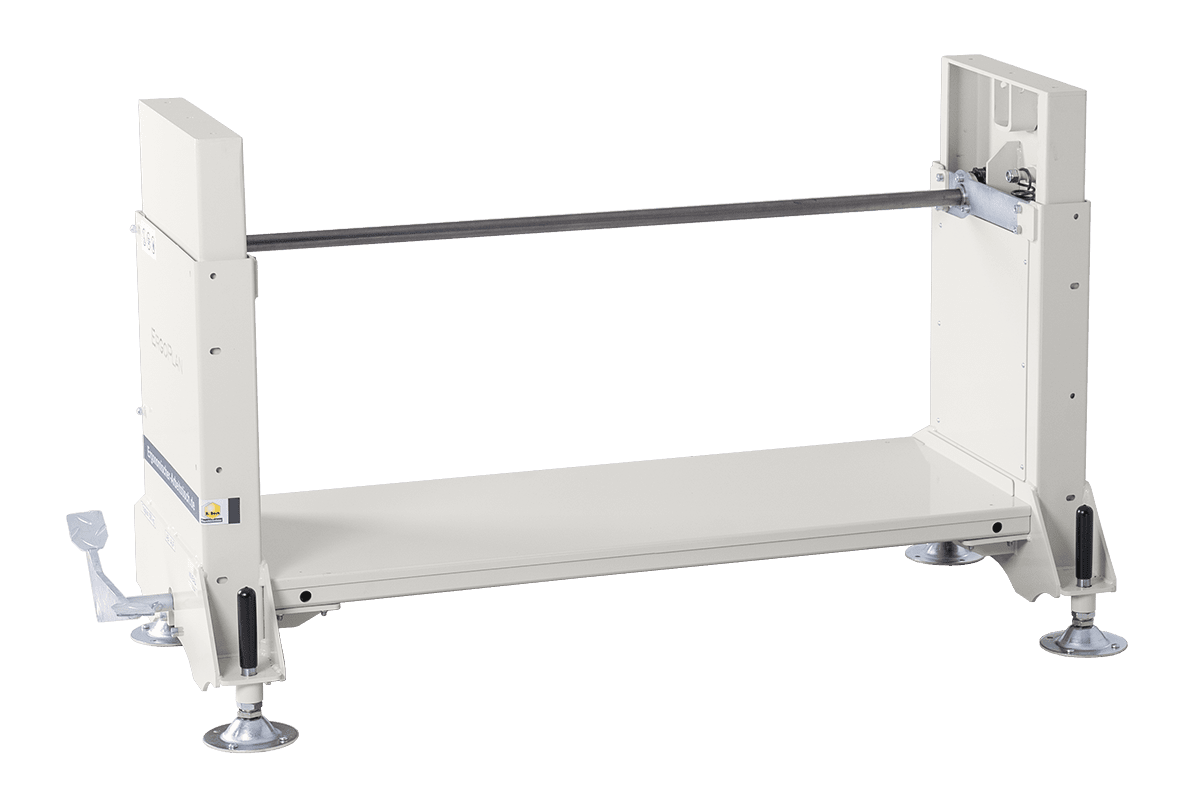
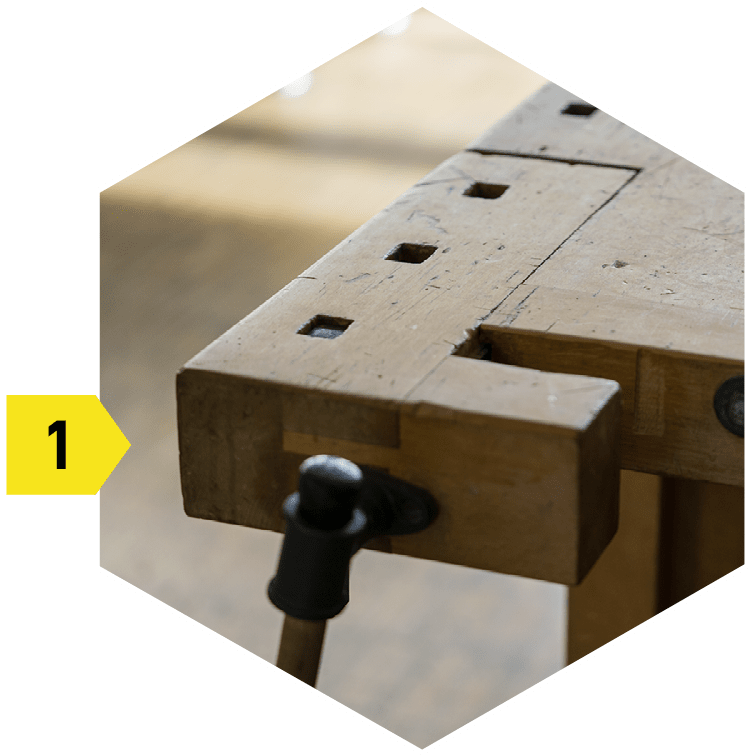
DISMANTLING
After collection by our forwarding company, your old planer bench top will be disassembled.
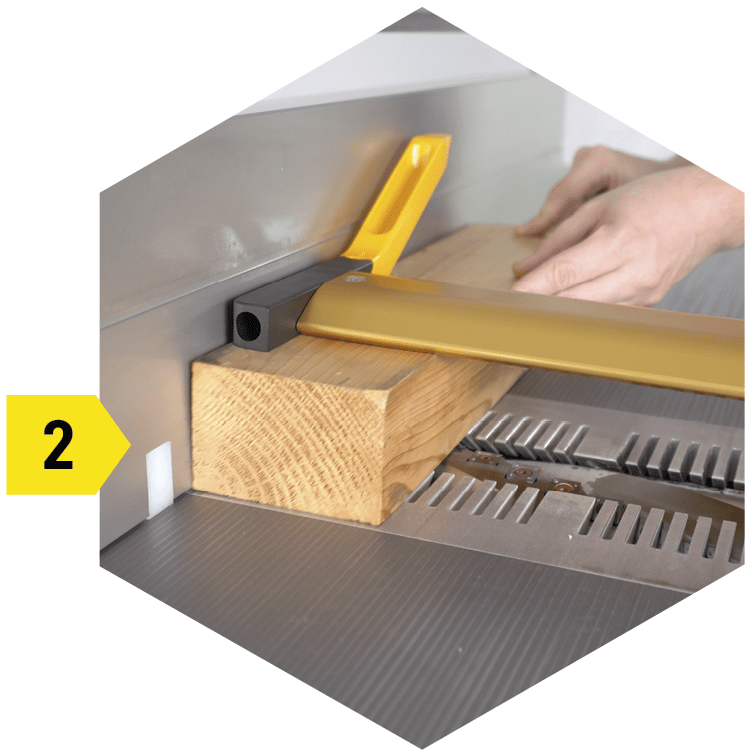
RENOVATION
The surfaces of your old planing bench top is sanded waxed and polished.
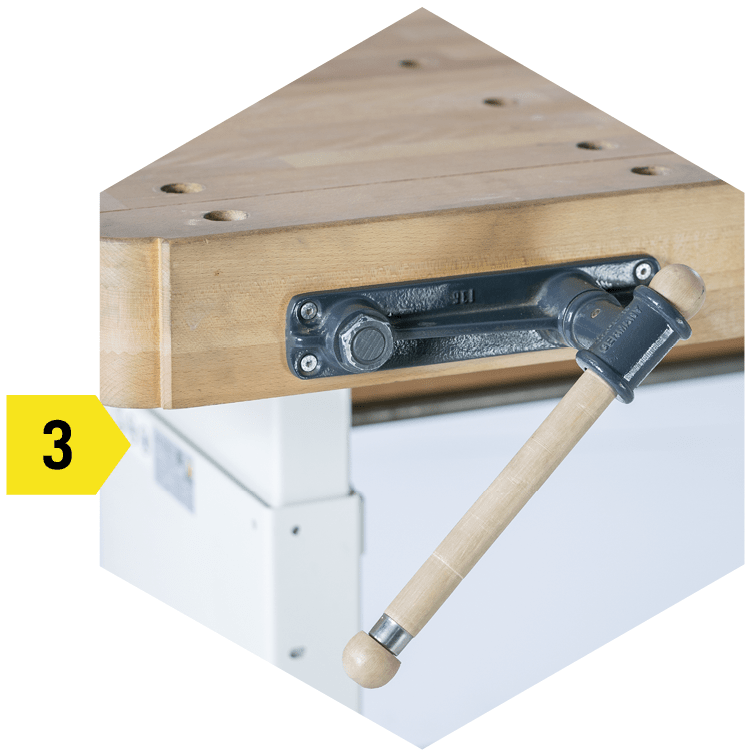
FUNCTIONAL PARTS
Bauteile, wie Vorder- und Hinterzangen, werden überprüft, aufbereitet und neu eingestellt oder durch neue, hochwertige Materialien ersetzt.

Your contact person:
Florian Schmolke
Sales
OUR NEW
2026 CATALOG
NEWSLETTER
SUBSCRIBE
BECK PRODUCTS
IN THE ONLINE SHOP
-

Lifting
-

Lowering
-

Conveying
-

Rotating
-

Tilting
-

Swivelling
Lifting
Lowering
Conveying
Rotating
Tilting
Swivelling